




nutrition
Best Beetroot Powder in UK: What to Look For Before You Buy

By FUNCTNL Team · Last updated 21 October 2026
The best beetroot powder in the UK states its nitrate content per serving, uses beetroot as the main ingredient and is tested for contaminants, because nitrate varies widely between products. Research typically uses about 350–500 mg of nitrate. FUNCTNL The Performer adds creatine and electrolytes, but does not state its nitrate content.
Key Takeaways
- Nitrate is the active compound in beetroot, and research typically uses 6–8 mmol, about 350–500 mg, 2–3 hours before exercise.
- Nitrate content varies significantly between beetroot supplements. In one lab test, concentrated juice provided nearly 500 mg per shot, while chews provided single-digit amounts per chew.
- A meta-analysis of 17 studies found a moderate improvement in time to exhaustion and a small, non-significant effect on time trials.
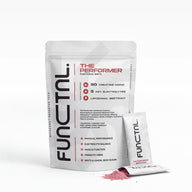
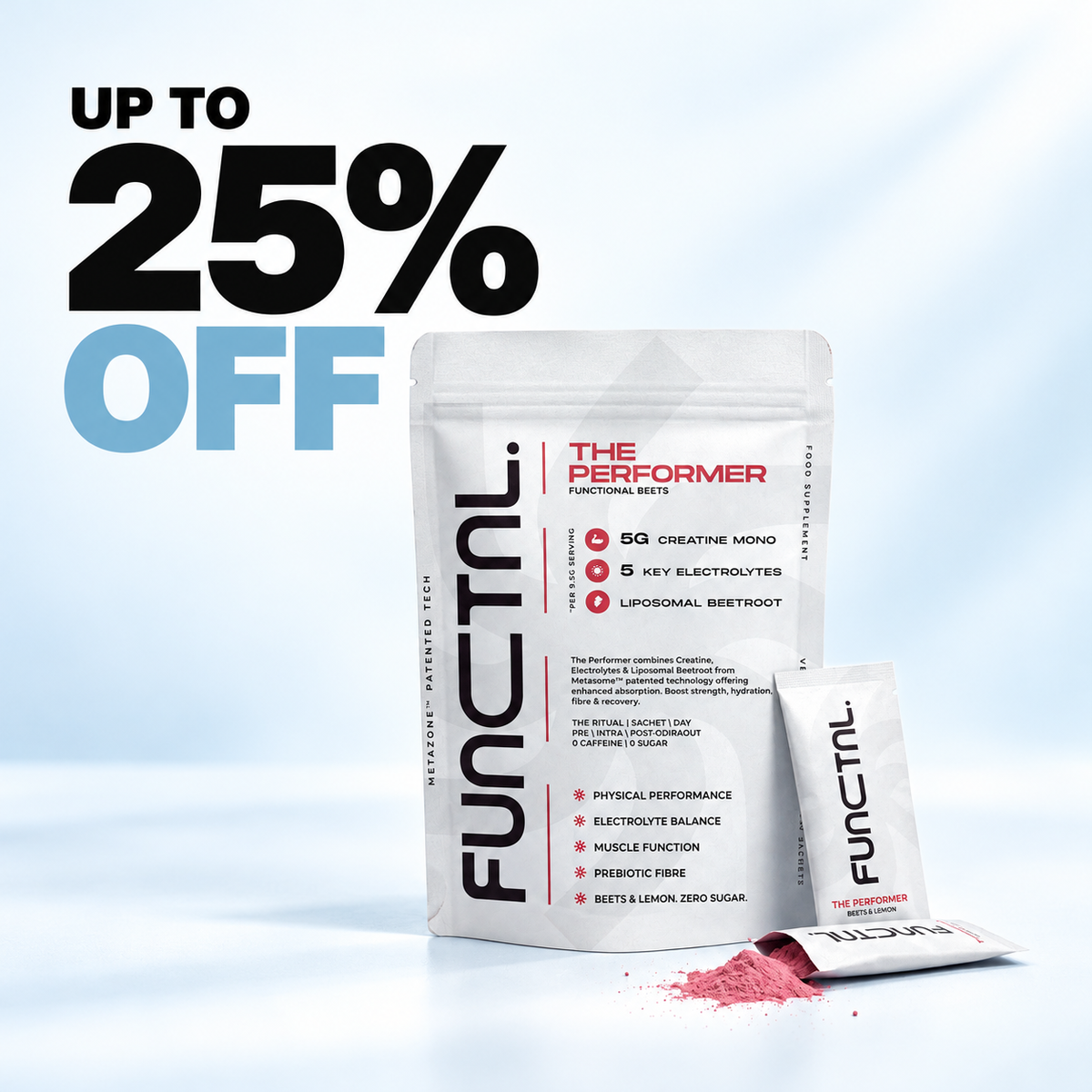
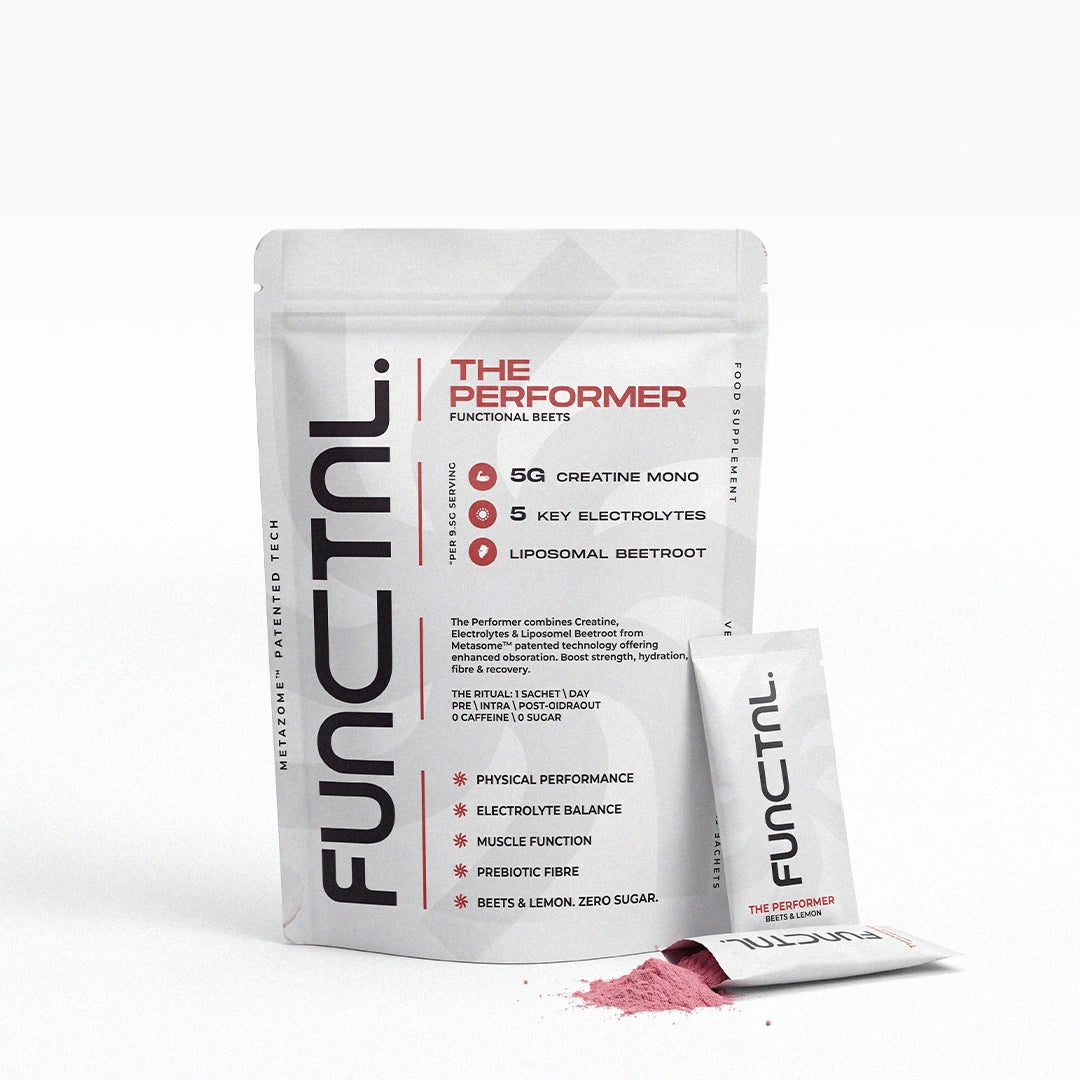
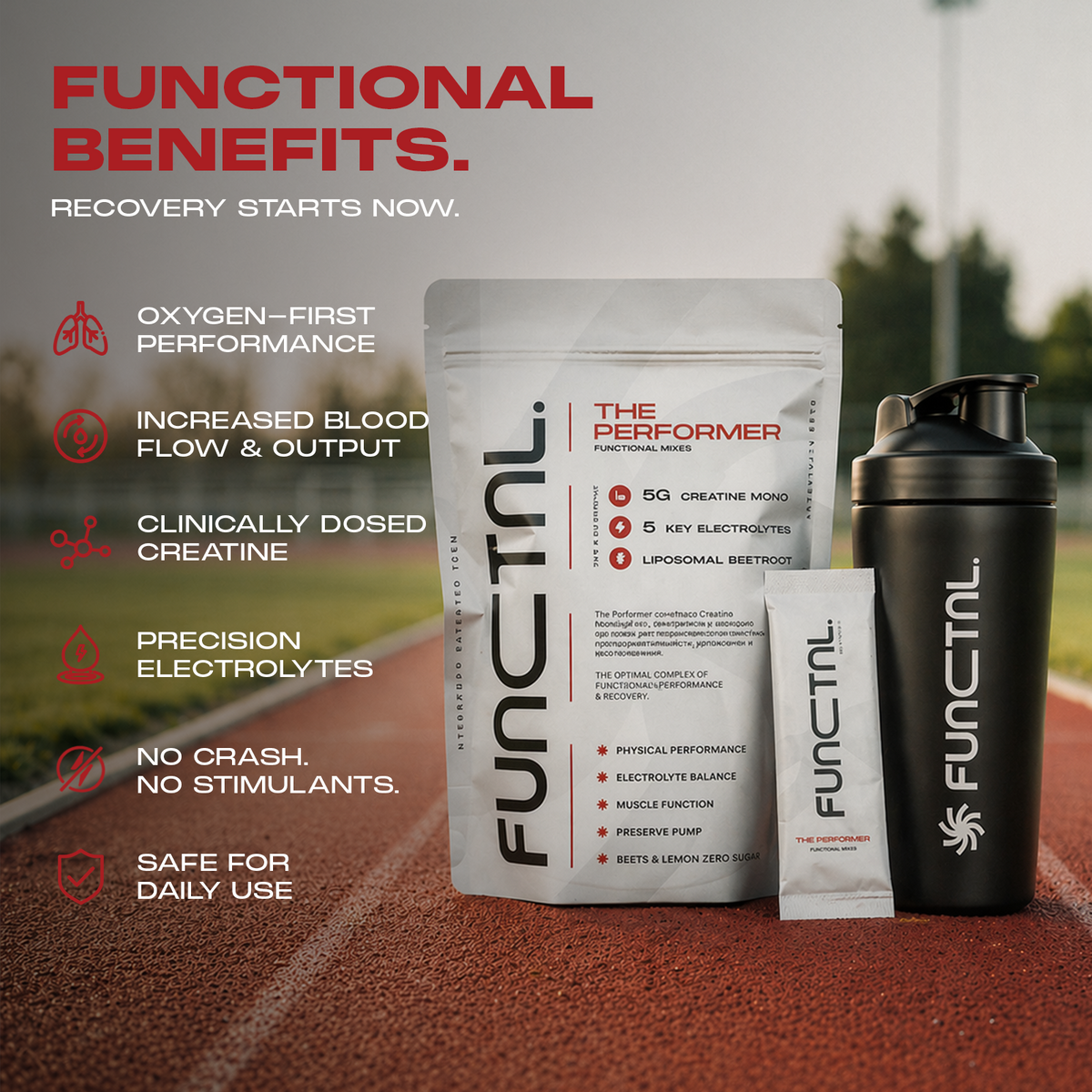
- One sachet of FUNCTNL The Performer provides 2,500 mg of liposomal beetroot, 5 g of creatine monohydrate and electrolytes, with 0 mg of caffeine.
- Beetroot can turn urine or stools pink or red, which is a common and generally harmless side effect.
Search for the best beetroot supplements UK shoppers can buy and you will find dozens of tubs, capsules and shots, each with a bold promise. Almost none tell you the one number that matters most: how much nitrate you actually get.
We make The Performer, which contains beetroot, so we will be straight about where it fits and where it does not. This guide shows you what to check on any label, what the research says and who each type of product suits.
It covers what beetroot powder is, how to choose one, how the different forms compare, how much to take, possible side effects and where The Performer fits.
What Is Beetroot Powder, and What Is a Beetroot Supplement Good For?
Beetroot powder is dried, ground beetroot taken as a supplement for its dietary nitrate, which your body converts into nitric oxide, a molecule that relaxes blood vessels.
Research on beetroot supplements focuses on exercise, because the idea is that nitric oxide changes how efficiently muscles use oxygen. There is no authorised UK health claim for beetroot or nitrate, so we describe what studies have looked at and make no promises about what a product will do for you.
Do Beetroot Supplements Work?
They can for some people, but the evidence is mixed. A meta-analysis of 17 studies found a moderate improvement in time to exhaustion and a small, non-significant effect on time trials, with benefits appearing more often in inactive or recreationally active people (Hoon et al., 2013).
How Do You Choose the Best Beetroot Supplement in the UK?
Judge a beetroot powder by its label, not its packaging. Check these six points before you buy:
- Nitrate is stated in milligrams per serving, because products without this information can be difficult to compare.
- The serving gets close to the 350–500 mg of nitrate used in research, or clearly states that it does not.
- Beetroot is the main ingredient, with no proprietary blend hiding the amounts.
- The form delivers nitrate: chews provided single-digit amounts per chew in one lab test.
- The brand tests for contaminants, as lead levels varied between products in that test.
- The price makes sense per 100 mg of nitrate, not simply per tub.
Why Does Nitrate Content Matter So Much?
The nitrate content of beetroot varies from plant to plant and with soil, climate and time since harvest, and many beetroot products leave it unspecified (Australian Institute of Sport).
In ConsumerLab testing, juices provided about 200–300 mg of nitrate per 8 fl oz cup, while a concentrated juice provided nearly 500 mg per shot. The cost of 100 mg of nitrate ranged from 30 cents to over $20, and powders were often the most cost-effective (ConsumerLab).
Beetroot Powder vs Juice vs Chews: Which Should You Choose?
Choose by stated nitrate content, not by form. A concentrated juice shot with a printed nitrate amount is the easiest way to match a research dose. A powder with a stated nitrate amount can offer good value. Chews suit convenience, but may not provide enough nitrate per serving to match research doses.
| Form | Nitrate in Lab Testing | Best For |
|---|---|---|
| Concentrated juice shot | Nearly 500 mg per shot | Matching a research dose |
| Beetroot juice | About 200–300 mg per 8 fl oz cup | Drinking with meals |
| Beetroot powder | Varies; check the label | Value, if nitrate content is stated |
| Beetroot chews | Single-digit amounts per chew in one lab test | Convenience |
Where Does FUNCTNL The Performer Fit?
The Performer is not a pure beetroot powder, and it is not the highest-nitrate option. Its label lists 2,500 mg of liposomal beetroot but not the nitrate content, so we cannot say a sachet matches the research dose.
What it offers is a combination of beetroot, creatine and electrolytes in one caffeine-free, sugar-free sachet. That suits people who want a single daily routine.
| Nutrient | Per 9.5 g Sachet |
|---|---|
| Liposomal beetroot | 2,500 mg |
| Creatine monohydrate | 5,000 mg |
| Potassium | 300 mg (15% NRV) |
| Magnesium | 149 mg (40% NRV) |
| Sodium | 175 mg |
| Vitamin B12 | 10 µg (400% NRV) |
| Caffeine and sugar | 0 mg and 0 g |
Can You Mix Creatine With Electrolytes?
Yes, and The Performer combines them in one sachet. Creatine is not an electrolyte. Electrolytes are minerals such as sodium, potassium and magnesium. Creatine increases physical performance in successive bursts of short-term, high-intensity exercise, while magnesium contributes to electrolyte balance and normal muscle function (Great Britain Nutrition and Health Claims Register).
The International Society of Sports Nutrition suggests 3–5 g of creatine per day (Kreider et al., 2017).
Is The Performer a Caffeine-Free Pre-Workout?
It is caffeine-free, but it is not a stimulant pre-workout. Creatine works by building up in muscle over weeks, so there is no caffeine-like buzz. You can take it before, during or after training.
How Much Beetroot Powder Should You Take, and When?
Studies typically use 350–500 mg of nitrate, taken 2–3 hours before exercise. For The Performer, take one sachet (9.5 g) a day in 300–400 ml of cold water. Choose an option below.
| Use | Amount | Liquid | Best Time |
|---|---|---|---|
| Training days | 1 sachet (9.5 g) | 300–400 ml cold water | Before, during or after training |
| Key sessions, following research timing | 1 sachet (9.5 g) | 300–400 ml cold water | 2–3 hours before |
| Rest days | 1 sachet (9.5 g) | 300–400 ml cold water | Same time as training days |
How Do You Mix It?
- Open one sachet and pour it into a shaker or glass.
- Add 300–400 ml of cold water.
- Shake or stir until it dissolves.
- Drink it at your chosen time.
- Repeat daily, including rest days.
Beetroot Supplement Side Effects: Who Should Avoid It?
Beetroot is a food, and most people tolerate it. The most common effect is pink or red urine or stools, which is generally harmless. Concentrated beetroot juice in large doses can sometimes cause mild stomach discomfort (Australian Institute of Sport).
- People with kidney disease should ask their GP first, as The Performer also contains creatine and potassium.
- Anyone on a low-sodium diet, or taking blood pressure or kidney medication, should check with their healthcare professional first. One sachet contains 175 mg of sodium.
- Anyone with an allergy to an ingredient should check the full label.
Food supplements should not replace a varied, balanced diet. Speak to your GP before use if you are pregnant, breastfeeding, taking medication or have a medical condition.
How FUNCTNL The Performer Fits In
We made The Performer for people who want a daily creatine routine without stimulants. Each 9.5 g sachet provides 2,500 mg of liposomal beetroot and 5 g of creatine monohydrate, plus 300 mg of potassium, 149 mg of magnesium, 175 mg of sodium and 10 µg of vitamin B12.
It is sweetened with stevia, has a natural beetroot and lemon flavour, and is halal, vegetarian, sugar-free and caffeine-free. A pack holds 15 sachets.
“Especially that beetroot, electrolyte and creatine powder, that tastes so good.”
— Lorell Scott, Running Coach
Frequently Asked Questions
What Is the Best Beetroot Supplement in the UK?
No single product is best for everyone. Look for a stated nitrate content per serving, beetroot as the main ingredient, no proprietary blend and contaminant testing. The Performer suits people who want beetroot with creatine and electrolytes, but it does not state its nitrate content.
Do Beetroot Supplements Work?
Possibly, for some people. A meta-analysis found a moderate benefit in time to exhaustion and a small, non-significant effect on time trials. Results depend on the nitrate dose and the person, so test any beetroot supplement in your own training before relying on it.
What Is a Beetroot Supplement Good For?
Research has looked mainly at exercise performance, using about 350–500 mg of nitrate taken 2–3 hours before exercise. There is no authorised UK health claim for beetroot or nitrate, so we do not promise results from our product.
What Are the Side Effects of Beetroot Supplements?
The most common effects are pink or red urine or stools, which are generally harmless, and occasional mild stomach discomfort, particularly with concentrated juice. If you have kidney disease, take medication, or are pregnant or breastfeeding, speak to your GP before use. Do not exceed the recommended daily intake.
Can You Take Beetroot Powder and Creatine Together?
Yes. They have different roles, and The Performer combines 2,500 mg of liposomal beetroot with 5 g of creatine monohydrate in one sachet. Mix it with 300–400 ml of cold water, and do not exceed one sachet a day.
Does Creatine Have Electrolytes in It?
No. Creatine is not an electrolyte. Electrolytes are minerals such as sodium, potassium and magnesium. The Performer provides both in one sachet: 5 g of creatine monohydrate, plus 300 mg of potassium, 149 mg of magnesium and 175 mg of sodium.
Is The Performer a Caffeine-Free Pre-Workout?
It is caffeine-free, with 0 mg per sachet, but it is not a stimulant pre-workout and will not give you a caffeine buzz. You can take it before, during or after training. Its creatine supports performance through regular daily use over time.
Sources
- Hoon MW, Johnson NA, Chapman PG, Burke LM (2013). The effect of nitrate supplementation on exercise performance in healthy individuals: A systematic review and meta-analysis. International Journal of Sport Nutrition and Exercise Metabolism.
- Australian Institute of Sport. Sports Supplement Framework: Beetroot Juice and Nitrate fact sheet.
- ConsumerLab. Beetroot supplements review: Nitrate content, cost and quality of beetroot juice, powder and chews.
- Kreider RB, Kalman DS, Antonio J, et al. (2017). International Society of Sports Nutrition position stand: Safety and efficacy of creatine supplementation in exercise, sport, and medicine. Journal of the International Society of Sports Nutrition.
- UK Government. Great Britain Nutrition and Health Claims Register.


