
nutrition
Do Muscle Recovery Supplements Work? What the Evidence Says

By FUNCTNL Team · Last updated 23 November 2026
Some muscle recovery supplements work, but none replaces training load, sleep and food. Protein at 1.4 to 2.0 g per kg a day has the strongest support, creatine suits repeated hard efforts, and magnesium contributes to normal muscle function with only small, mixed recovery studies. FUNCTNL Magnesium Glycinate 3-in-1 provides 384 mg per serving.
Key takeaways
- A 2024 systematic review of 4 studies in physically active people found magnesium supplements reduced muscle soreness, but the studies were few and small.
- A meta-analysis found no significant gain in muscle strength or power from magnesium in athletes who already have adequate magnesium status.
- There is no authorised UK health claim that magnesium supports muscle recovery, only claims about normal muscle function, tiredness and fatigue.
- The NHS says 400 mg or less a day of magnesium from supplements is unlikely to cause harm, and more can cause diarrhoea.
- Protein is spread best across the day, at about 0.25 g per kg per meal.
After a hard session, the shelf of recovery powders and capsules makes big promises. Which ones are worth your money, and which are just a label? This article sorts the supplements with real evidence from the ones without, shows the doses research uses and explains where magnesium fits. It also covers what we can and cannot say about our own formula, so you can judge it fairly. For a closer look at magnesium forms, read our article on magnesium glycinate vs citrate.
What are muscle recovery supplements?
Muscle recovery supplements are products taken around training to support your body after exercise, such as protein, creatine and minerals like magnesium. In the UK, there is no authorised health claim that magnesium supports muscle recovery, so labels may only use authorised claims about specific nutrients, such as normal muscle function.
Recovery is hard to measure. Studies use soreness scores, strength and power tests and recovery markers, and none of these is the same as feeling ready to train. Supplements also work on top of training load, sleep and food, not instead of them, which is why the first question is always whether you have a gap to fill.
How does magnesium fit into muscle recovery?
Magnesium contributes to normal muscle function, to electrolyte balance and to a reduction of tiredness and fatigue (GB NHC register). Researchers think it matters after exercise because magnesium moves from the blood into tissues, and low levels may affect muscle contraction and soreness (Tarsitano et al., 2024).
Magnesium is therefore one nutrient among several, not a recovery switch. That is why the evidence below is mixed, and why the dose and your starting status matter.
What does the research show about muscle recovery supplements?
Does protein help muscle recovery?
Protein has the strongest support. The International Society of Sports Nutrition (ISSN) recommends 1.4 to 2.0 g of protein per kg of body weight a day for people who exercise, spread at about 0.25 g per kg per meal (Jäger et al., 2017). Your daily total matters most.
In Great Britain, protein contributes to the maintenance of muscle mass (GB NHC register). A protein powder is simply a convenient way to reach your daily total, not a different kind of recovery product.
Does creatine help repeated hard efforts?
Yes, for high intensity exercise. The ISSN concluded that creatine monohydrate is the most effective supplement for increasing high intensity exercise capacity, at 3 to 5 g a day (Kreider et al., 2017). That can mean better quality repeated sessions.
We do not claim creatine speeds recovery, because that is not an authorised claim. Creatine monohydrate is the form studied, and 3 to 5 g a day fills muscle stores over several weeks, so it works through daily use.
Does magnesium help muscle recovery?
Possibly for soreness, but the evidence is small. A 2024 systematic review of 4 studies found magnesium reduced muscle soreness (Tarsitano et al., 2024), while a meta-analysis found no strength or power gain in athletes with adequate magnesium status (Magnesium Research, 2017).
People with low magnesium may benefit more. The 2024 review covered only 4 studies that used different doses and types of exercise, so treat its result as a signal, not a rule.
Do other recovery supplements work?
Other options exist, such as tart cherry and omega-3, but we have not reviewed their evidence for this article, so we make no claim about them. Before you buy any recovery product, ask what it contains, at what dose, and what trials in people actually measured.
How much should you take each day?
Aim for 1.4 to 2.0 g of protein per kg, 3 to 5 g of creatine monohydrate, and keep supplemental magnesium to 400 mg or less (NHS). The table shows each amount and where it comes from. One serving of Magnesium 3 in 1 provides 384 mg.
| Supplement | Amount per day | Basis |
|---|---|---|
| Protein | 1.4 to 2.0 g per kg of body weight | ISSN position stand |
| Creatine monohydrate | 3 to 5 g | ISSN position stand |
| Magnesium from supplements | 400 mg or less | NHS level unlikely to cause harm |
| Magnesium Glycinate 3-in-1 | 384 mg elemental (2 capsules) | Product label, 102% NRV |
When is the best time to take magnesium?
Take it whenever you will remember it every day. In the studies reviewed, magnesium was taken in capsules about 2 hours before training (Tarsitano et al., 2024). The label for Magnesium Glycinate 3-in-1 says to take 2 capsules with water, ideally with food, so choose one regular time.
How do you take Magnesium Glycinate 3-in-1?
- Take 2 capsules once a day.
- Swallow them with water.
- Take them with food if you can.
- Keep the same time each day, including rest days.
- Count any other magnesium supplements before you add this one.
Muscle recovery supplements: myths and facts
Myth: more magnesium means faster recovery
Fact: the NHS says more than 400 mg a day from supplements can cause diarrhoea, and the meta-analysis found no strength benefit for athletes with adequate magnesium status (NHS).
Stay within the labelled dose, and remember that a higher dose is not a faster route to recovery.
Myth: supplements can replace food and sleep
Fact: the ISSN framework starts with total daily protein and its spread across meals, not a powder after one session (Jäger et al., 2017). Supplements fill gaps in a routine that already has food, training load and sleep right.
Myth: you need a recovery supplement after every session
Fact: protein and creatine work through daily totals, and magnesium is a daily nutrient, not a post-workout fix. One regular routine does the job, so you do not need a new product after every session. Keep it simple, and add a product only when you can say what gap it fills.
Is it safe to take magnesium for muscle recovery?
Yes, at the right dose. The NHS says 400 mg or less a day of magnesium from supplements is unlikely to cause harm, and that adults need 300 mg a day if male and 270 mg if female (NHS). One serving of Magnesium 3 in 1 gives 384 mg, so it should be your only magnesium supplement.
Who should avoid it?
- People with kidney disease should ask their GP first.
- Anyone taking medicines should check with a pharmacist, as magnesium can interact with some, including some antibiotics.
- Anyone taking another supplement that contains magnesium should count the total first.
Food supplements should not replace a varied, balanced diet. Speak to your GP before use if you are pregnant, breastfeeding, taking medication or have a medical condition.
How FUNCTNL Magnesium Glycinate 3-in-1 fits in
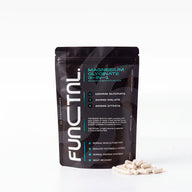
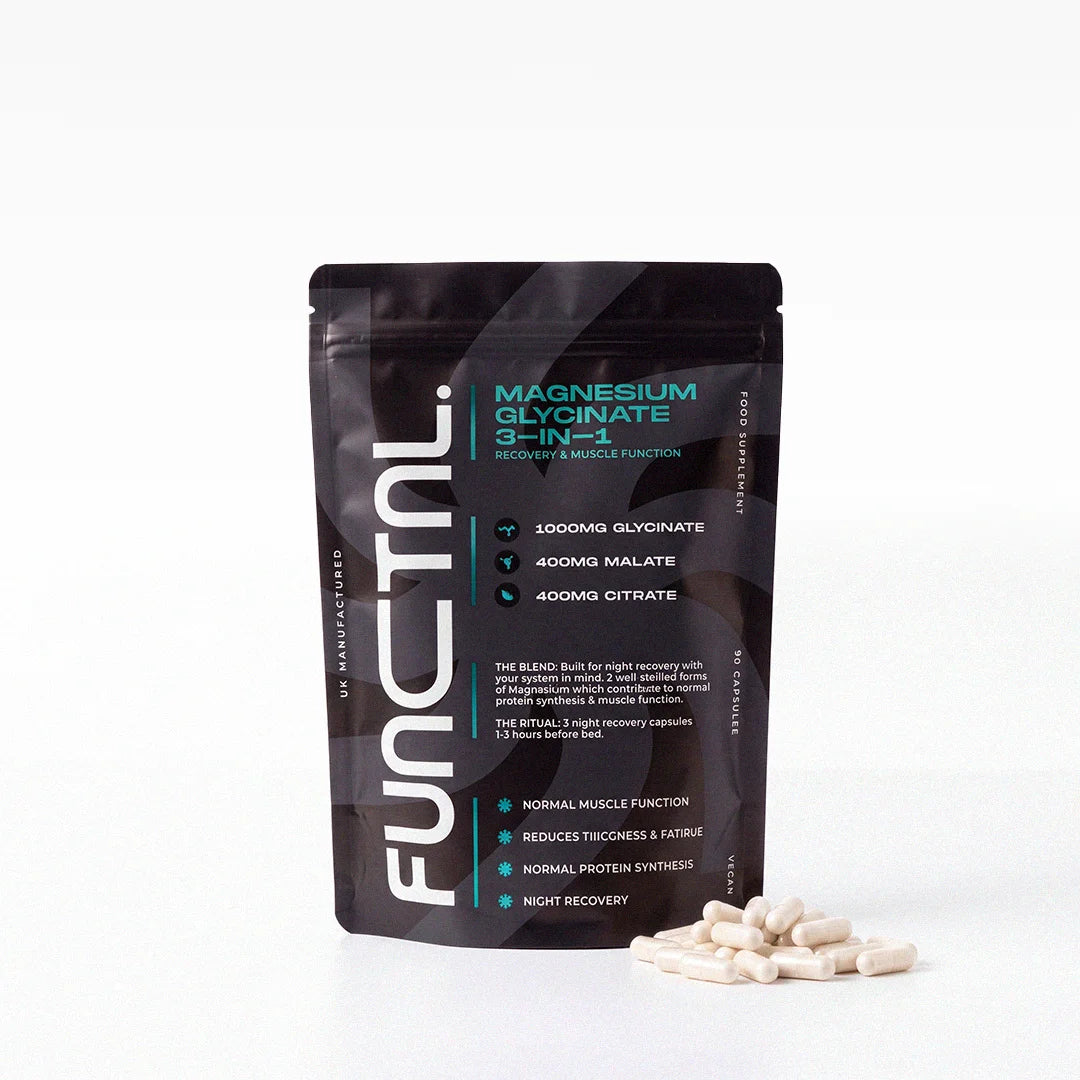
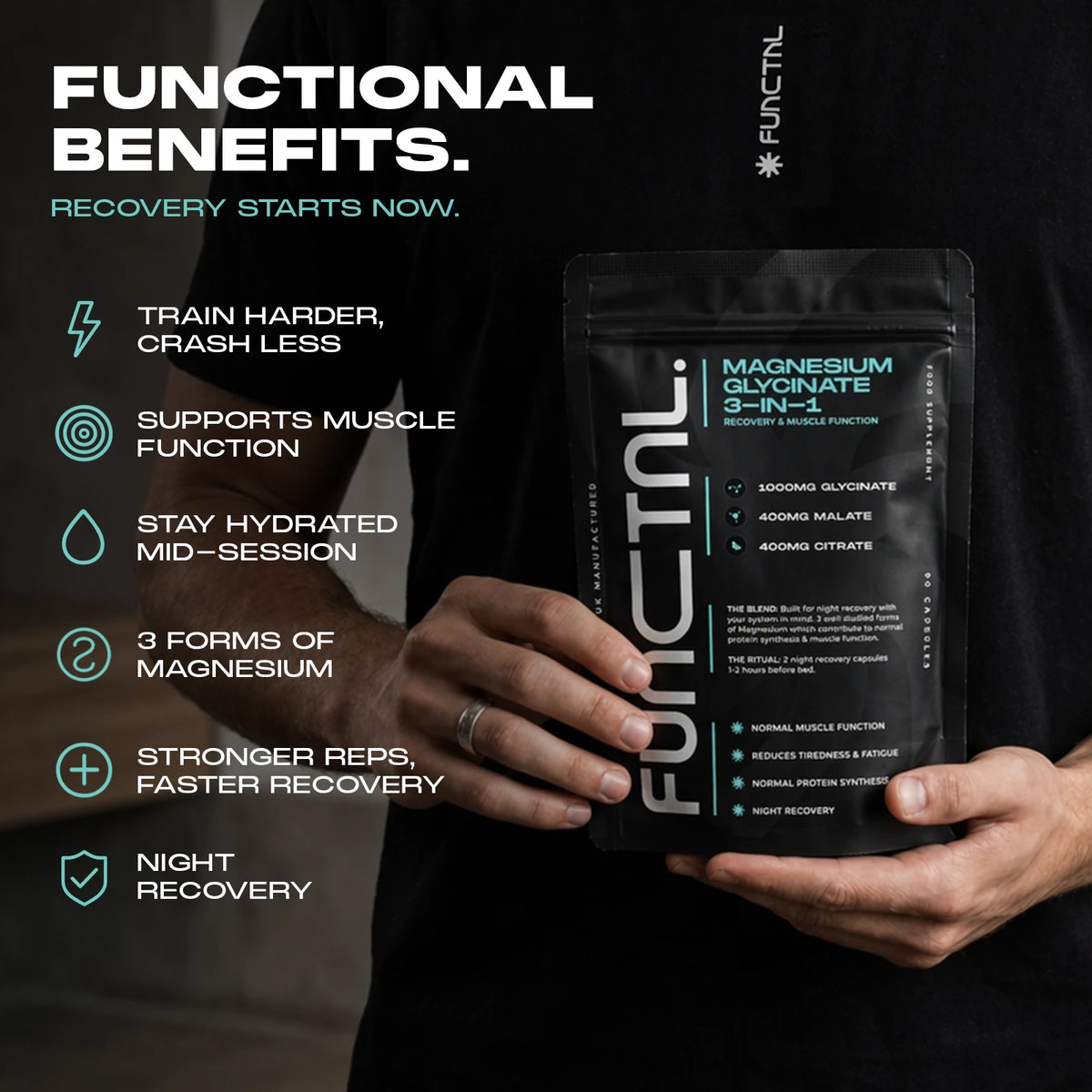
Each serving of 2 capsules provides 1,000 mg of magnesium glycinate, 400 mg of magnesium malate and 400 mg of magnesium citrate, which is 1,800 mg of compounds and 384 mg of elemental magnesium (102% NRV). It is a high-strength option that stays below the 400 mg NHS level. Magnesium contributes to a reduction of tiredness and fatigue, normal muscle function and electrolyte balance (GB NHC register).
Here is what only we can say: we built this complex from three forms so the dose does not rely on any single one, with no proprietary blends. A pack holds 90 capsules, a 45-day supply. It is vegan friendly and halal friendly. We make no claim that it speeds muscle recovery.
"Very high quality product." Hamad, Personal Trainer
Shop FUNCTNL Magnesium Glycinate 3-in-1
Frequently asked questions
When should you take glycinate 3 in 1?
Take 2 capsules once a day with water, ideally with food, at a time you will keep to. Some people take them before training, as in the studies above, and others with breakfast or dinner.
Consistency matters more than the exact hour. Do not exceed the recommended daily intake.
What is glycinate 3 in 1 good for?
Magnesium Glycinate 3-in-1 provides magnesium, and magnesium contributes to a reduction of tiredness and fatigue, normal muscle function, electrolyte balance, normal energy-yielding metabolism and the maintenance of normal bones. These are authorised claims for magnesium. We do not claim it speeds muscle recovery.
Is Magnesium Glycinate 3-in-1 a high-strength magnesium?
It provides 384 mg of elemental magnesium per serving, which is 102% of the NRV and just under the 400 mg a day the NHS says is unlikely to cause harm from supplements. That makes it a full-strength option, not a mega-dose. Count any other magnesium you take before you add it.
Does FUNCTNL deliver outside the UK?
Yes. Besides the UK, we deliver to Dubai, Kuwait, Malta, North Cyprus, Ghana, Tanzania, Kenya, Uganda and Bangladesh. Delivery options for your country are confirmed at checkout.
Should you take recovery supplements on rest days?
Mostly yes. Protein totals matter every day, and creatine works by keeping muscle stores full, so it is taken on rest days too. Magnesium is a daily nutrient, so the label says to take it daily. Skip anything you cannot explain, and speak to your GP if you take medicines.
Sources
- Jäger R, Kerksick CM, Campbell BI, et al. (2017). International Society of Sports Nutrition position stand: protein and exercise. Journal of the International Society of Sports Nutrition 14:20.
- Kreider RB, Kalman DS, Antonio J, et al. (2017). International Society of Sports Nutrition position stand: safety and efficacy of creatine supplementation in exercise, sport, and medicine. Journal of the International Society of Sports Nutrition 14:18.
- The effect of magnesium supplementation on muscle fitness: a meta-analysis and systematic review (2017). Magnesium Research 30(4):120-132.
- Tarsitano MG, Quinzi F, Folino K, Greco F, Oranges FP, Cerulli C, Emerenziani GP (2024). Effects of magnesium supplementation on muscle soreness in different type of physical activities: a systematic review. Journal of Translational Medicine 22:629.
- NHS. Vitamins and minerals: others (magnesium).
- UK Government. Great Britain nutrition and health claims (NHC) register.


