

hormones
How Much Vitamin B6 Per Day? UK Limits Explained

By FUNCTNL Team · Last updated 20 November 2026
UK adults need about 1.2 to 1.4 mg of vitamin B6 a day, and the NHS says not to take more than 10 mg a day from supplements unless a doctor advises it. Too much over a long time can cause a loss of feeling in the arms and legs.
Key takeaways
- The NHS gives about 1.4 mg a day for men and 1.2 mg for women aged 19 to 64.
- The NHS limit from supplements is 10 mg a day, and the European Food Safety Authority (EFSA) set an adult upper level of 12 mg a day in 2023.
- Doses of 200 mg or more a day are linked to nerve damage, and the effects between 10 mg and 200 mg are unclear.
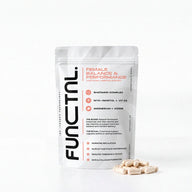
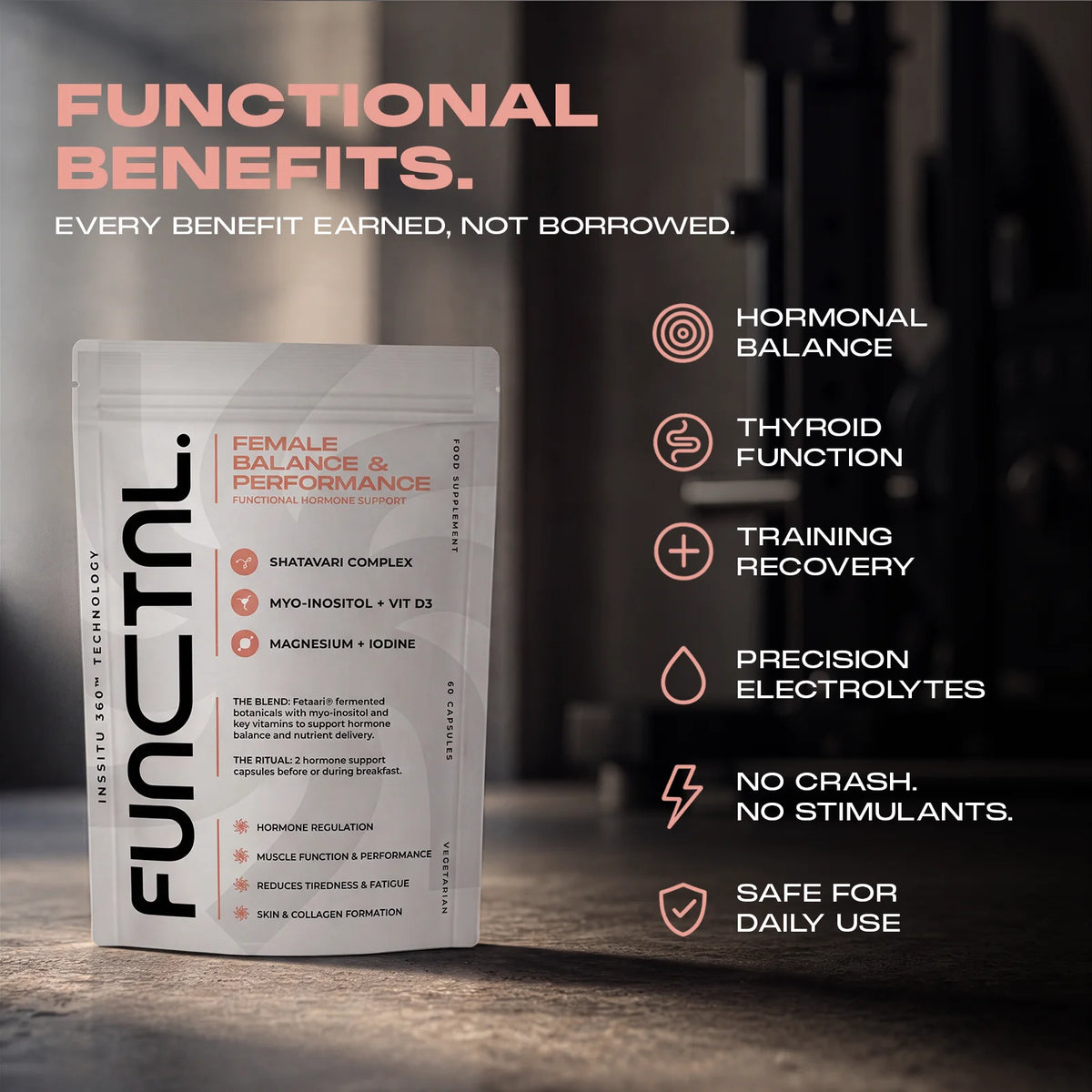
- FUNCTNL Female Balance & Performance has 2.8 mg of B6 per 2 capsules, which is 200% of the nutrient reference value (NRV).
- B6 adds up across products, so check every supplement you take.
Vitamin B6 is easy to get from food, but it also turns up in multivitamins, B-complex tablets and fortified foods. That is why the question is not only "how much do I need?" but "how much am I already taking?". This guide gives the UK daily amount, the safe limit, the signs of too much and a simple way to check your labels. For what B6 does for women, see our guide to vitamin B6 for women.
How much vitamin B6 per day do you need in the UK?
Women aged 19 to 64 need about 1.2 mg a day and men need about 1.4 mg, according to the NHS (NHS). The nutrient reference value (NRV) on UK labels is 1.4 mg, so a label showing 100% NRV means 1.4 mg.
| Reference point | Vitamin B6 (mg a day) | Source |
|---|---|---|
| Women aged 19 to 64 | 1.2 | NHS |
| Men aged 19 to 64 | 1.4 | NHS |
| Label NRV (100%) | 1.4 | UK labelling |
| Limit from supplements | 10 | NHS |
| Adult upper level | 12 | EFSA, 2023 |
| Doses linked to nerve damage | 200 or more | NHS |
Which foods contain vitamin B6?
Vitamin B6 is found in a wide range of foods, including poultry, some fish, peanuts, soya beans, wheatgerm, oats, bananas, milk and fortified breakfast cereals (NHS). Most people who eat a varied diet get their daily amount from food.
What does vitamin B6 do?
Vitamin B6 contributes to the regulation of hormonal activity and to the reduction of tiredness and fatigue. It also contributes to normal red blood cell formation and normal protein and glycogen metabolism. These are authorised claims on the GB Nutrition and Health Claims Register.
How much vitamin B6 is too much?
The NHS advises not taking more than 10 mg of vitamin B6 a day in supplements unless a doctor advises it. EFSA set a tolerable upper intake level of 12 mg a day for adults in 2023, based on peripheral neuropathy, which is nerve damage (EFSA, 2023). The two figures are close, and both are far below the doses linked to harm.
What are the signs of too much vitamin B6?
Doses of 200 mg or more a day can cause a loss of feeling in the arms and legs. This usually improves after stopping, but in a few cases with large amounts over several months it has been permanent. The effects of doses between 10 mg and 200 mg are unclear (NHS). If you notice numbness or a change in feeling, stop the supplement and speak to your GP.
Why do B6 amounts add up?
B6 appears in many places, so the total matters more than any one label. A multivitamin, a B-complex tablet, a pre-workout and fortified cereal can each contain some. Stacking them is how people drift above 10 mg without noticing.
How do you check your supplement labels?
- Find vitamin B6 on each label. It may be listed as pyridoxine or pyridoxal-5-phosphate (P-5-P).
- Read the amount in mg per serving, not per pack.
- Multiply by the number of servings you take a day.
- Add the totals from every supplement.
- Compare the sum with 10 mg. As a shortcut, 10 mg is about 714% of the NRV.
Here is an example, not a recommendation. A supplement with 2.8 mg, a B-complex with 5 mg and a multivitamin with 2 mg add up to 9.8 mg a day, close to the limit before any food.
How does Female Balance & Performance fit in?
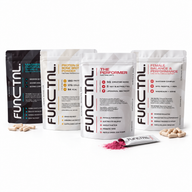
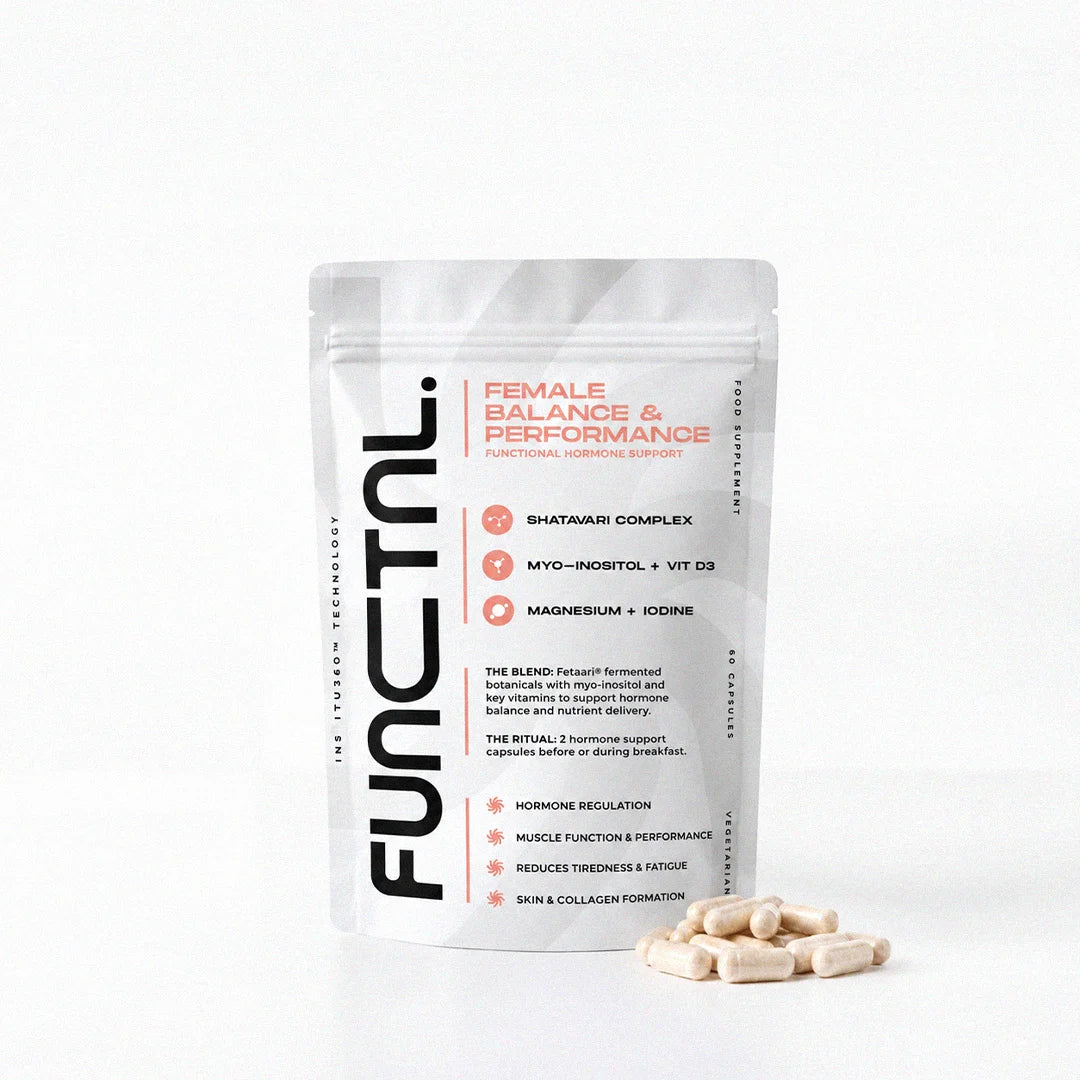
FUNCTNL Female Balance & Performance gives 2.8 mg of vitamin B6 per 2 capsules, which is 200% NRV and 28% of the 10 mg supplement limit. That leaves room under the limit, but you should still count any other B6 you take. Each serving also contains 250 mg of Fetaari® (a shatavari and fenugreek complex), 250 mg of myo-inositol, 80 mg of vitamin C, 500 IU of vitamin D3, 150 mcg of iodine and 40 mg of magnesium (bisglycinate).
Take 2 capsules a day, ideally in the morning with breakfast and water. A pack of 60 capsules lasts 30 days. The product is vegetarian, and free from gluten, dairy, lactose, soy and sugar, with no artificial colouring. Fenugreek is a legume, so check the label if you have a legume allergy. Vitamin B6 contributes to the regulation of hormonal activity and to the reduction of tiredness and fatigue.
Shop Female Balance & Performance
Who should check with a professional first?
- People who are pregnant or breastfeeding
- People taking medication
- People with a thyroid condition
- People already taking B6, vitamin D or iodine in other supplements
Do not exceed the recommended daily intake. Food supplements should not replace a varied, balanced diet. Speak to your GP before use if you are pregnant, breastfeeding, taking medication or have a medical condition. For more on combining products, read which vitamins should not be taken together.
Frequently asked questions
Is 2.8 mg of vitamin B6 a lot?
No. 2.8 mg is 200% of the 1.4 mg NRV, but it is only 28% of the 10 mg NHS supplement limit. The total from all your supplements is what counts.
Can you get too much vitamin B6 from food?
The NHS limit applies to supplements. Foods such as poultry, fish, oats, bananas and fortified cereals supply B6 as part of a mixed diet. Count fortified foods and drinks as well as tablets when you add up your day.
Should I check B6 in all my supplements?
Yes. Check every multivitamin, B-complex and sports product you take, because each may contain B6. Add the amounts together and keep the total at or below 10 mg unless a doctor advises otherwise.
Why do the UK and EU limits differ?
The NHS advice is 10 mg a day from supplements, while EFSA's 2023 upper level is 12 mg a day. They come from different bodies using the available evidence, and both are aimed at avoiding nerve damage. If you want to stay within UK advice, use the lower figure.
Can you take Female Balance & Performance with other supplements?
Usually yes, but check the total vitamin D, B6 and iodine from all your products. Speak to your GP or pharmacist if you have a thyroid condition or take medication.


