
nutrition
Creatine and Beetroot Together: Do They Work as a Stack?

By FUNCTNL Team · Last updated 04 November 2026
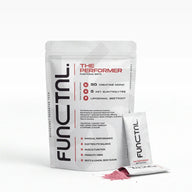
Yes, you can take creatine and beetroot together, because they work through different pathways: creatine builds up in muscle over weeks, while beetroot supplies nitrate, typically 350 to 500 mg before exercise in research. We found no trial of the pair, so the evidence for each stands alone. FUNCTNL The Performer provides both in one sachet.
Key Takeaways
- Creatine works by building up in muscle, so taking it every day matters more than the exact time.
- One 2025 study tested beetroot and creatine separately, not together, and both improved peak velocity compared with placebo.
- A systematic review found no evidence that creatine impairs heat tolerance or hydration status.
- Sweat rates and sweat electrolyte losses vary widely between people, so hot-weather needs are personal.
- The label of The Performer does not state the nitrate content of its beetroot.
Creatine and beetroot are two of the best-known sports supplements, and they are usually sold separately. That leaves a practical question: does it make sense to use them in the same routine? This article explains what each one does, whether combining them adds anything, how much to take and what to think about in hot weather or during Ramadan. It also covers ordering from outside the UK, because many readers train in hot climates. For another beetroot angle, read our article on beetroot powder for runners.
What Does Taking Creatine and Beetroot Together Mean?
Taking creatine and beetroot together means using two supplements with different jobs in one routine. Creatine monohydrate is a compound your muscles store as phosphocreatine to help regenerate ATP during short, hard efforts. Beetroot supplies dietary nitrate, which your body converts into nitric oxide, a molecule that relaxes blood vessels. Neither is a stimulant, and neither contains caffeine.
How Does Each One Work?
Creatine supplementation raises muscle creatine and phosphocreatine by 20 to 40%, which supports repeated high intensity efforts (Kreider et al., 2017). The effect builds as stores fill, so creatine works over weeks of daily use, not in a single dose.
Beetroot acts through a different route. Nitrate is converted to nitrite by bacteria in your mouth and then to nitric oxide, which may change how efficiently muscles use oxygen. Because the two supplements target different systems, nothing suggests one blocks the other. They are complementary in theory, and in practice a convenience stack. That is how we describe it, because no study has measured the combination.
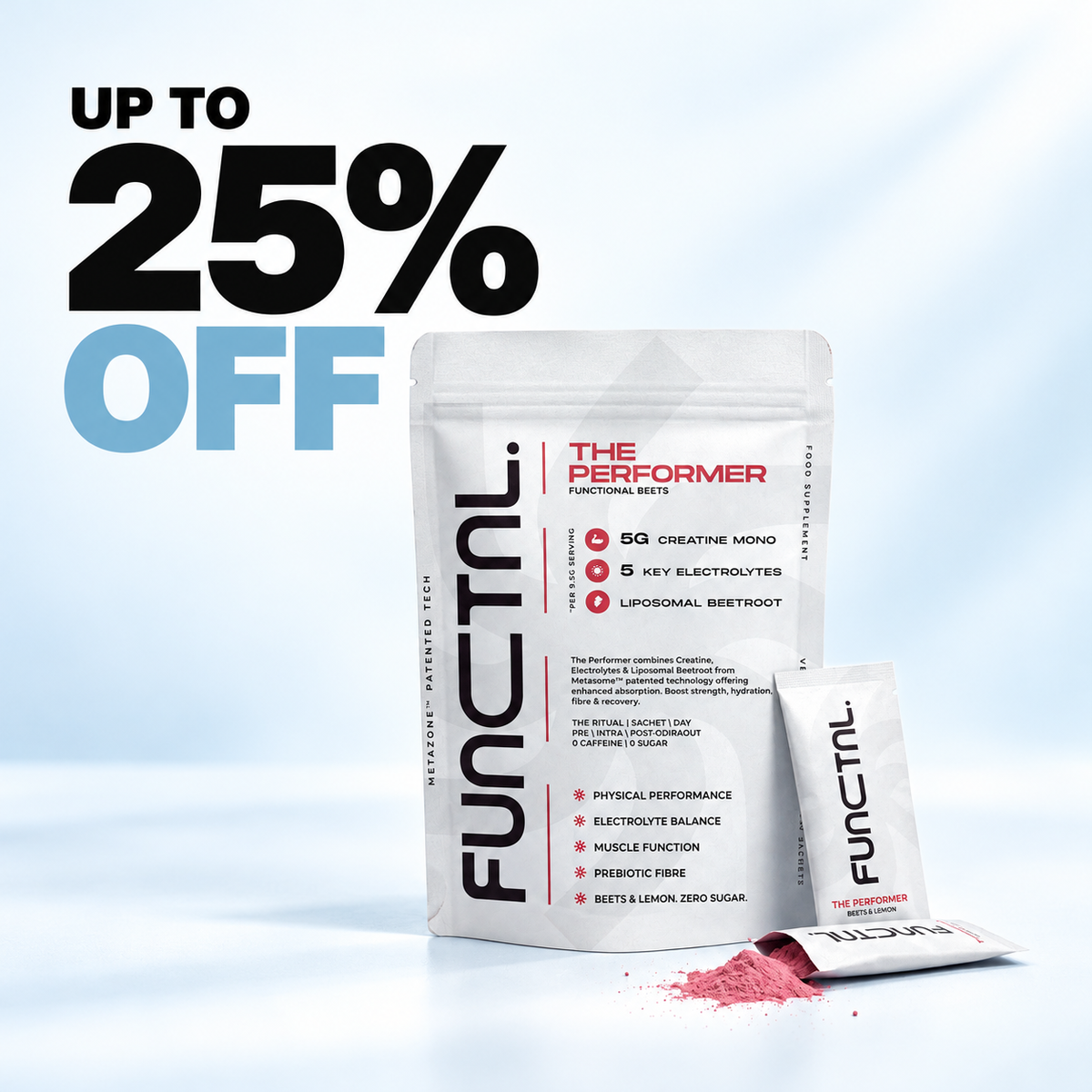
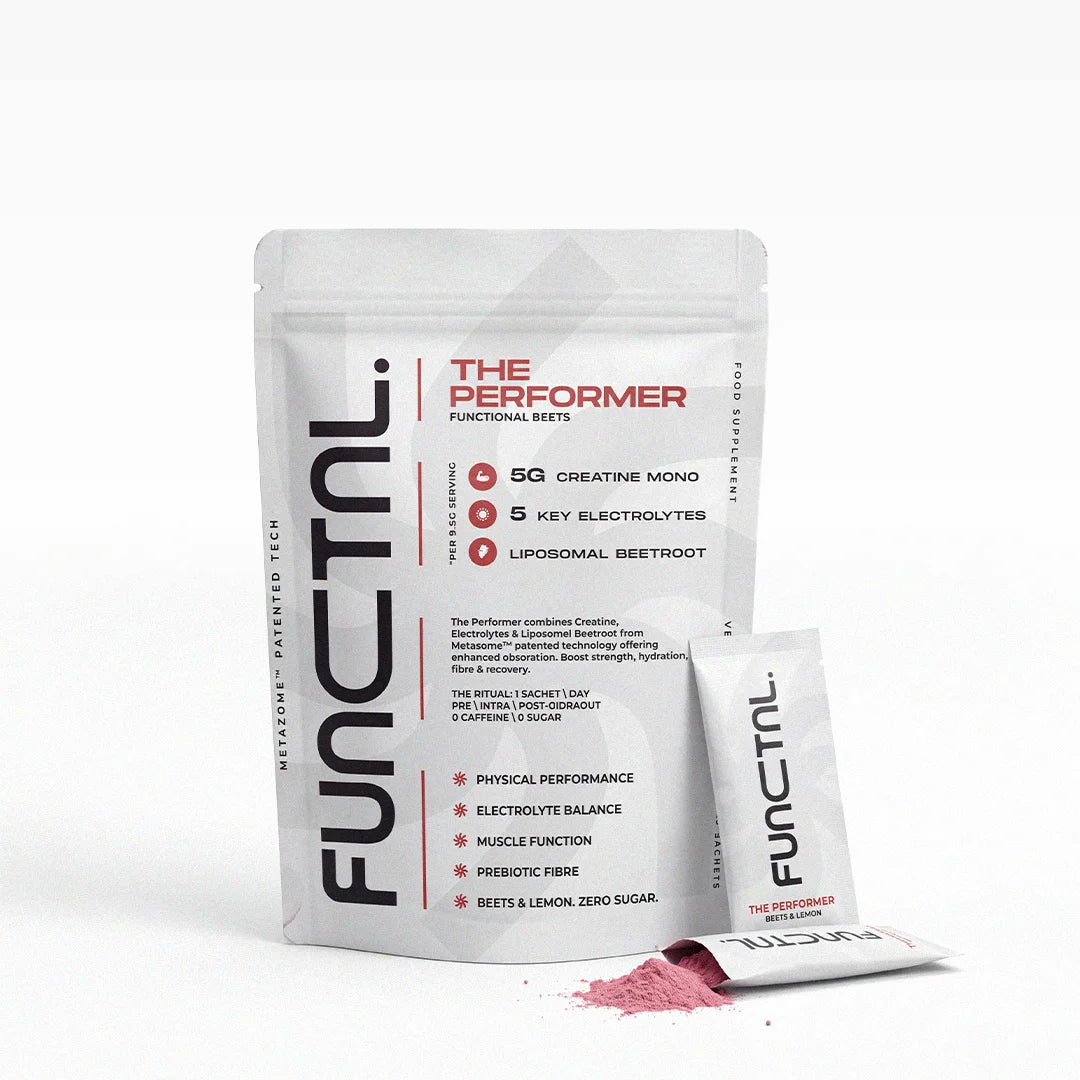
The Performer adds a third element: electrolytes, the minerals sodium, potassium and magnesium that you lose in sweat. Liposomal beetroot is beetroot wrapped in a fat layer, using MetaZome technology, that is designed to help it absorb.
What Does the Research Show About Creatine and Beetroot?
Does Creatine Improve Strength and Power?
Yes, for high intensity exercise. The International Society of Sports Nutrition (ISSN) concluded that creatine monohydrate is the most effective supplement for increasing high intensity exercise capacity (Kreider et al., 2017). In Great Britain, creatine increases physical performance in successive bursts of short-term, high intensity exercise, with the effect from 3 g a day, for adults (GB NHC register).
Does Beetroot Improve Exercise Performance?
It can for some people. A meta-analysis of 17 studies found nitrate supplementation moderately improved time to exhaustion, with a small, non-significant effect on time trials (Hoon et al., 2013). There is no authorised UK health claim for beetroot or nitrate, so this is research, not a promise.
Have Creatine and Beetroot Been Tested Together?
We found no trial of creatine monohydrate and beetroot taken together. One 2025 study tested them separately in 11 active men: both beetroot powder (15 g, 450 mg of nitrate) and creatine improved peak velocity compared with placebo (Salem et al., 2025). Beetroot also gave higher muscle oxygenation. It was small and acute, so regard it as a signal only.
That study also shows why labels matter. Its 15 g of beetroot powder supplied 450 mg of nitrate, so a 2.5 g serving of a similar powder would supply far less. Nitrate varies by product.
Does Creatine Cause Dehydration in Hot Weather?
No evidence supports that. A systematic review with meta-analysis found no evidence that creatine supplementation impairs exercise heat tolerance or hydration status (Lopez et al., 2009). That matters in hot countries, where this myth puts many people off creatine, so you can stop worrying about it.
Do You Need Electrolytes When You Train in the Heat?
It depends on how much you sweat. Sweat rates and the electrolytes lost in sweat vary widely between people, and drinks with electrolytes can beat water alone in some situations (Sawka et al., 2007). Magnesium contributes to electrolyte balance, and potassium contributes to normal muscle function (GB NHC register).
How Much Should You Take Each Day?
Take 3 to 5 g of creatine monohydrate a day, which is the ISSN range (Kreider et al., 2017). For beetroot, studies use 350 to 500 mg of nitrate, so follow the nitrate on the label. One sachet of The Performer gives 5,000 mg of creatine monohydrate and 2,500 mg of liposomal beetroot.
| Ingredient | Amount per day (mg) | Timing | Form |
|---|---|---|---|
| Creatine monohydrate (research range) | 3,000 to 5,000 | Any time, every day | Powder in water |
| Creatine monohydrate (The Performer) | 5,000 | Any time, every day | 1 sachet in 300 to 400 ml cold water |
| Beetroot nitrate (research range) | 350 to 500 | 2 hours before exercise in one study | Juice, powder or shot with stated nitrate |
| Liposomal beetroot (The Performer) | 2,500 | Same sachet as creatine | 1 sachet in 300 to 400 ml cold water |
| Electrolytes (The Performer) | Potassium 300, magnesium 149, sodium 175 | Same sachet | 1 sachet in 300 to 400 ml cold water |
When Is the Best Time to Take Them?
Take creatine whenever you will remember it every day, because its effect depends on filling muscle stores, not on timing (Kreider et al., 2017). In the 2025 study, beetroot powder and creatine were each taken 2 hours before sessions (Salem et al., 2025). For The Performer, choose one regular time, and test it in training first.
How Do You Take It in One Sachet?
- Open 1 sachet and pour it into a shaker or glass.
- Add 300 to 400 ml of cold water, the colder the better.
- Shake or stir until it dissolves.
- Drink it before, during or after training, or at midday.
- Repeat daily, including rest days.
How Do You Take It During Ramadan?
Have it outside fasting hours, because it is food and breaks the fast. Many people take their sachet at suhoor or after iftar, mixed with 300 to 400 ml of cold water. Because it has no caffeine and 0 g of sugar, it suits an evening routine.
Creatine and Beetroot Myths: What Is True?
Myth: Creatine Dehydrates You
Fact: A systematic review found no evidence that creatine impairs heat tolerance or hydration (Lopez et al., 2009). You still need to drink enough, especially in hot weather.
Myth: You Must Load Creatine First
Fact: Loading works faster, but 3 to 5 g a day also fills muscle stores, over about 4 weeks (Kreider et al., 2017). One sachet of The Performer gives 5 g a day.
Myth: More Beetroot Is Always Better
Fact: The benefit depends on nitrate, not on the weight of beetroot, and results are mixed across studies (Hoon et al., 2013). Look for a stated nitrate amount, and compare it with the 350 to 500 mg used in research.
Myth: Electrolytes Are Only for Endurance Athletes
Fact: Sweat rates and sweat electrolyte losses vary widely between people, and anyone who sweats heavily may lose more than they expect (Sawka et al., 2007). Training in a hot climate makes that more likely.
Is Taking Creatine and Beetroot Together Safe?
For healthy adults, yes. The ISSN found no compelling evidence that creatine harms healthy people at recommended doses (Kreider et al., 2017). Beetroot can colour urine and stools pink or red, which is harmless. Do not exceed 1 sachet of The Performer a day.
Who Should Avoid It?
- People with kidney disease should ask their GP first, as creatine and potassium are involved.
- Anyone taking blood pressure medication should speak to their GP before regular beetroot use.
- Anyone on a low-sodium diet should check first, as one sachet has 175 mg of sodium.
Food supplements should not replace a varied, balanced diet. Speak to your GP before use if you are pregnant, breastfeeding, taking medication or have a medical condition.
How FUNCTNL The Performer Fits In
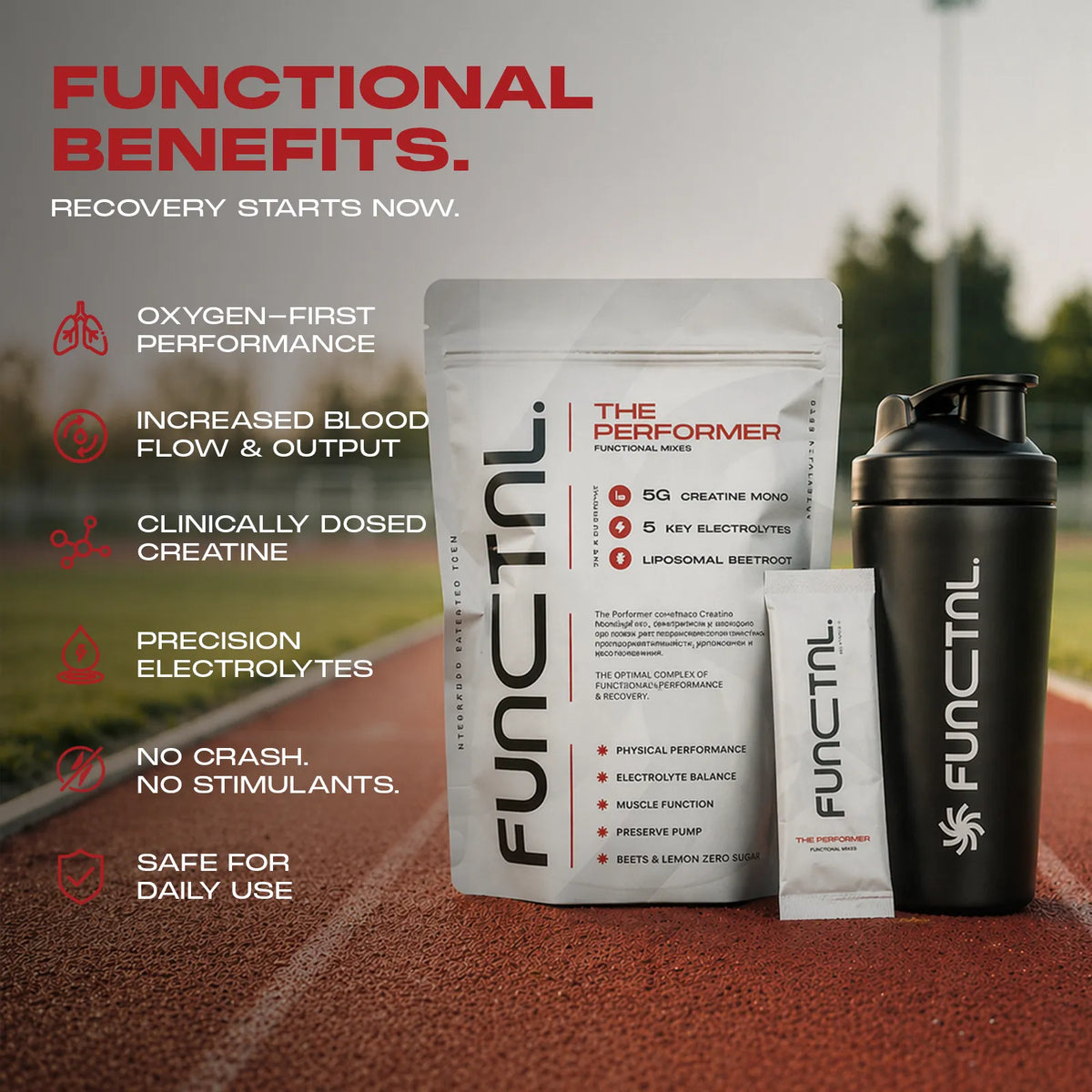
The Performer puts 5,000 mg of creatine monohydrate, 2,500 mg of liposomal beetroot, 300 mg of potassium, 149 mg of magnesium, 175 mg of sodium and 10 µg of vitamin B12 in each 9.5 g sachet. Here is what only we can say: we chose a full 5 g creatine dose with no proprietary blends, kept it caffeine-free and sugar-free, and did not state the nitrate of the beetroot, so we make no nitrate claim.
It is halal friendly, suitable for vegetarians, and a pack holds 15 sachets.
"Clean, tastes good and a halal brand." Sabrina Abugrin, Malta National Netball Player
Can You Order The Performer from Outside the UK?
Yes. FUNCTNL delivers to Dubai, Kuwait, Malta, Northern Cyprus, Ghana, Tanzania, Kenya, Uganda and Bangladesh. International shipping is calculated at checkout, so you see the cost before you pay. Any import duties or taxes are paid by the recipient (our shipping policy).
Rules for importing food supplements differ by country, so check your local rules before you order. If customs refuses a parcel and it comes back to us intact, we refund the product cost but not the shipping. We do not accept change-of-mind returns on international orders, and we will put right any order that arrives damaged or faulty. Many of these destinations are hot, which is why the heat and electrolyte research above matters.
Frequently Asked Questions
Can You Take Creatine and Beetroot on Rest Days?
Yes. Creatine works by keeping muscle stores full, so take it daily, including rest days. Beetroot is optional on rest days, but The Performer combines both in one sachet, so you take it the same way. Use 1 sachet a day with 300 to 400 ml of cold water.
Can You Take The Performer in Hot Weather?
Yes. A systematic review found no evidence that creatine impairs heat tolerance or hydration. The Performer adds sodium, potassium and magnesium, but it has no carbohydrate, so follow your own drinking plan for long sessions. Sweat losses differ between people, so drink according to thirst and conditions.
Is The Performer Halal?
The label says halal friendly, and it is suitable for vegetarians. It is gluten-free, dairy-free, soy-free and sugar-free, with 0 mg of caffeine. If you need to know more about certification for your own requirements, contact FUNCTNL support before you order.
How Long Does Creatine Take to Work?
Taking 3 to 5 g a day fills muscle stores over about 4 weeks, according to the ISSN. A loading phase is faster, but it is not required. One sachet of The Performer gives 5 g, so expect the gradual route and stay consistent with daily use.
What Does The Performer Taste Like?
It has a beets and lemon flavour, sweetened with stevia, with 0 g of sugar and no artificial colouring. One customer describes it as not sweet. Mix it with 300 to 400 ml of cold water, and the colder the water, the better it tastes.
Sources
- Kreider RB, Kalman DS, Antonio J, et al. (2017). International Society of Sports Nutrition position stand: safety and efficacy of creatine supplementation in exercise, sport, and medicine. Journal of the International Society of Sports Nutrition 14:18.
- Hoon MW, Johnson NA, Chapman PG, Burke LM (2013). The effect of nitrate supplementation on exercise performance in healthy individuals: a systematic review and meta-analysis. International Journal of Sport Nutrition and Exercise Metabolism.
- Salem A, Ammar A, Kerkeni M, et al. (2025). Acute effects of beetroot juice vs. creatine supplementation on maximal strength, autonomic regulation, and muscle oxygenation during incremental resistance exercise. Biology of Sport 42(4):241-259.
- Lopez RM, Casa DJ, McDermott BP, Ganio MS, Armstrong LE, Maresh CM (2009). Does creatine supplementation hinder exercise heat tolerance or hydration status? A systematic review with meta-analyses. Journal of Athletic Training 44(2):215-223.
- Sawka MN, Burke LM, Eichner ER, Maughan RJ, Montain SJ, Stachenfeld NS (2007). American College of Sports Medicine position stand: exercise and fluid replacement. Medicine and Science in Sports and Exercise.
- UK Government. Great Britain nutrition and health claims (NHC) register.


