



nutrition
Magnesium Glycinate 3 in 1: Benefits, Dose and Who It Suits

By FUNCTNL Team · Last updated 6 November 2026
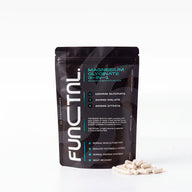
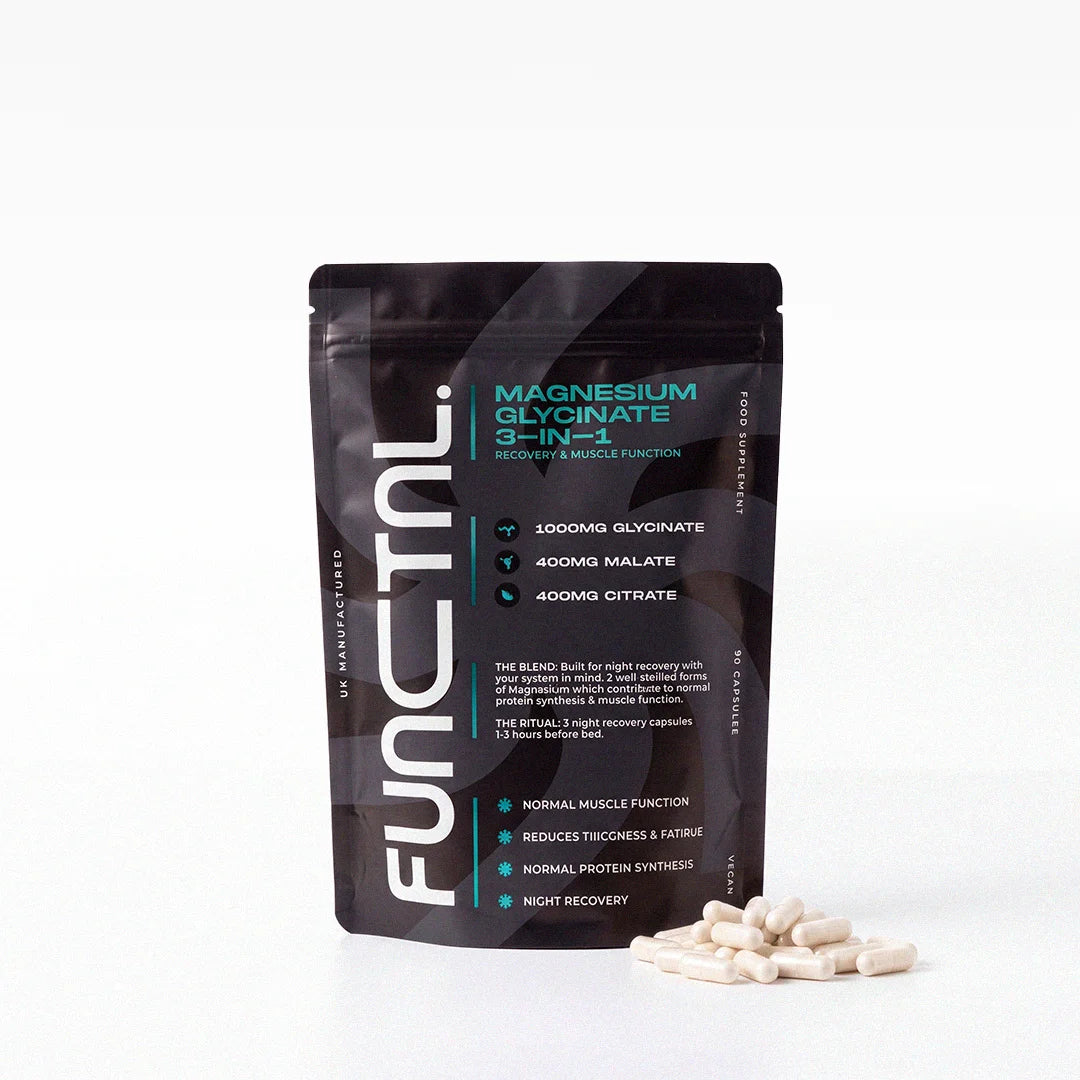
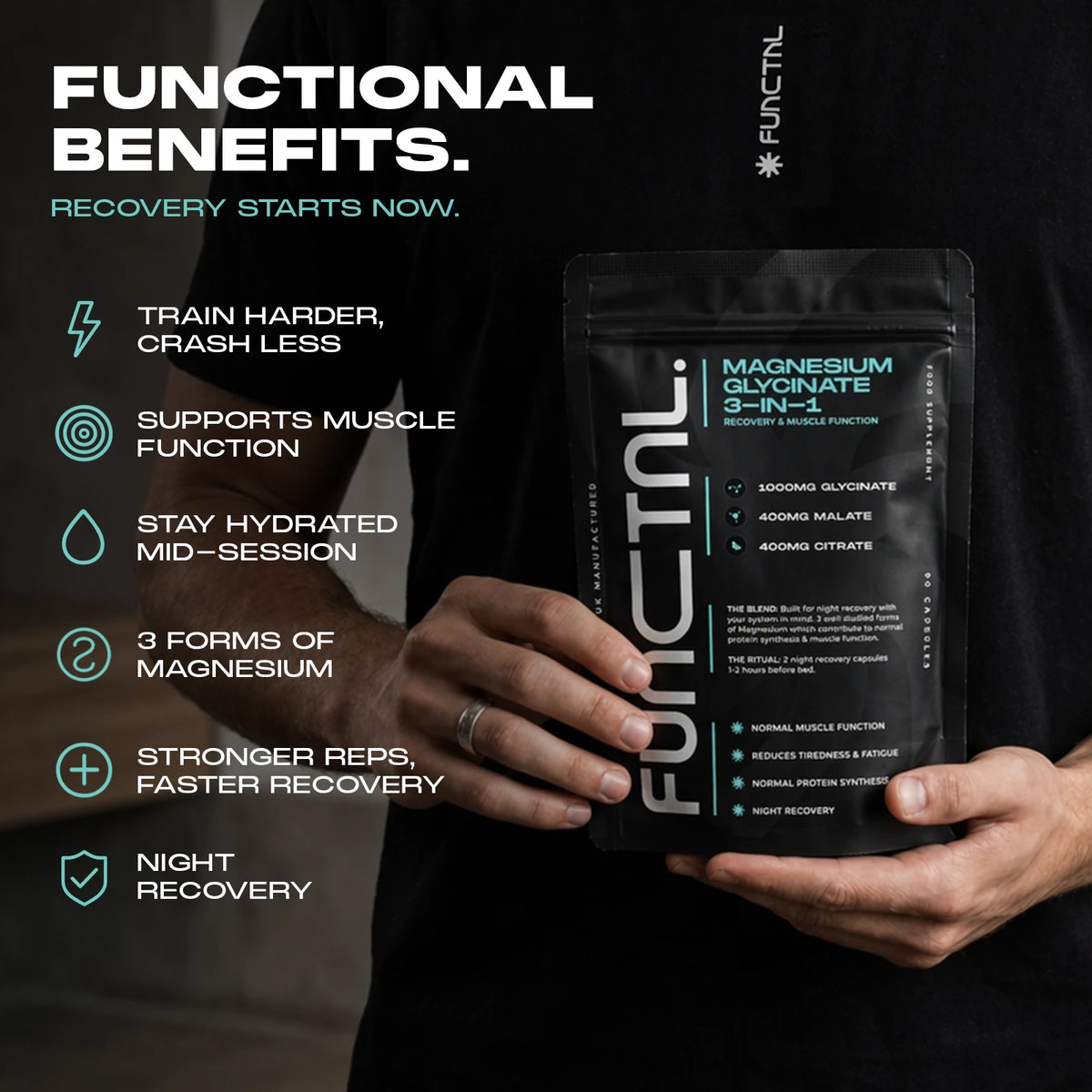
Magnesium glycinate 3 in 1 is a capsule that combines three forms of magnesium, glycinate, malate and citrate, in one serving. FUNCTNL's version gives 384 mg of elemental magnesium (102% NRV) in 2 capsules, and magnesium contributes to a reduction of tiredness and fatigue.
Key Takeaways
- Each 2-capsule serving holds 1,000 mg magnesium glycinate, 400 mg magnesium malate and 400 mg magnesium citrate.
- UK guidance says 400 mg or less of magnesium from supplements a day is unlikely to cause harm.
- Trials on magnesium and sleep in older adults are encouraging, but the evidence is low quality.
- One pack of 90 capsules lasts 45 days at 2 capsules a day.
- FUNCTNL delivers this product in the UK and to Dubai, Kuwait, Malta, North Cyprus, Ghana, Tanzania, Kenya, Uganda and Bangladesh.
Magnesium is one of the most searched supplements in the UK, yet the labels are confusing. Glycinate, malate, citrate and oxide are all magnesium, but each is bound to a different partner molecule. This guide explains what a 3 in 1 formula is, what research shows, how much to take and who should check with a professional first. For the wider picture, read our guide to magnesium for sleep and recovery. Delivery to countries outside the UK is covered near the end.
What Is Magnesium Glycinate 3 in 1?
Magnesium glycinate 3 in 1 is a food supplement that blends three organic forms of magnesium in one serving. "Organic form" means the mineral is bound to a natural compound: glycine (an amino acid), malic acid or citric acid. Magnesium itself is a mineral your body uses in hundreds of reactions, from muscle movement to turning food into energy.
How Does It Work?
Your gut absorbs magnesium best when it is bound to a partner molecule, and each partner behaves differently. A 2003 randomised trial found magnesium citrate raised blood magnesium more than magnesium oxide (Walker et al., 2003). A 3 in 1 formula spreads one daily dose across three partners instead of relying on one. For a side-by-side look, see our comparison of glycinate, citrate and malate.
What Does the Research Show About Magnesium?
Does Magnesium Reduce Tiredness and Fatigue?
Magnesium contributes to a reduction of tiredness and fatigue, according to the GB Nutrition and Health Claims Register. It also contributes to normal muscle function, normal psychological function and normal nervous system function. These are authorised claims for the mineral, worded as the register allows.
Does Magnesium Affect Sleep?
A 2021 systematic review pooled 3 trials with 151 older adults and found magnesium shortened the time taken to fall asleep by about 17 minutes. The authors rated the evidence low quality (Mah and Pitre, 2021). A 2012 trial gave 46 older adults with insomnia 500 mg of magnesium daily for 8 weeks and reported longer sleep time than placebo (Abbasi et al., 2012). Both studies looked at older adults, so results may not apply to everyone. This is research on magnesium, not a claim about FUNCTNL products.
How Much Magnesium Glycinate 3 in 1 Should You Take a Day?
Take 2 capsules a day with water, ideally with food. This provides 384 mg of elemental magnesium, which is 102% of the nutrient reference value (NRV). UK guidance says 400 mg or less from supplements is unlikely to cause harm (Food Standards Scotland).
| Reference point | Daily amount (mg) |
|---|---|
| FUNCTNL Magnesium 3 in 1, 2 capsules | 384 |
| Supplement level unlikely to cause harm | 400 or less |
| Reference intake, men | 300 |
| Reference intake, women | 270 |
When Should You Take It?
Take both capsules with food at a time you will remember, then keep it the same every day. Consistency matters more than the clock. Our guide to the best time to take magnesium covers morning versus evening.
How Do You Take It?
- Keep to 2 capsules in 24 hours.
- Swallow both capsules with water, ideally with a meal.
- Open the capsules and stir the powder into a smoothie or drink if you prefer.
- Store the pack in a cool, dry place below 25°C.
- Stop and speak to a professional if discomfort persists.
Which Magnesium Myths Should You Ignore?
Myth: More Magnesium Always Works Better
Fact: More is not better. Taking high doses for a short time can cause diarrhoea, and the effect of high doses over a long time is not well known (Food Standards Scotland). Stay with the label serving.
Myth: Magnesium Works Like a Sleeping Tablet
Fact: Magnesium is a mineral, not a sedative. Research on sleep is limited to small trials in older adults. Sleep habits such as regular bedtimes still do the heavy lifting.
Is This Supplement Safe?
Magnesium supplements are generally well tolerated when taken as directed. Mild digestive changes, such as loose stools, can occur, mostly at higher doses. Magnesium may interact with some medicines, including certain antibiotics.
Who Should Avoid It?
Check with a professional before use if you:
- Are pregnant or breastfeeding.
- Take any medication, especially antibiotics.
- Have a medical condition, including kidney problems.
Food supplements should not replace a varied, balanced diet. Speak to your GP before use if you are pregnant, breastfeeding, taking medication or have a medical condition.
How FUNCTNL Magnesium 3 in 1 Fits In
Two capsules give 1,000 mg magnesium glycinate, 400 mg magnesium malate and 400 mg magnesium citrate. That is 1,800 mg of magnesium compounds and 384 mg of elemental magnesium (102% NRV). We chose three forms so one serving carries more than one type of magnesium, rather than a single form at a larger dose. The capsules are UK manufactured, vegan friendly, halal friendly, gluten free, dairy free, soy free and sugar free, in a plant-based capsule shell. A pack of 90 capsules is a 45-day supply.
Shop Magnesium Glycinate 3 in 1
Does FUNCTNL Deliver Magnesium 3 in 1 Outside the UK?
Yes. FUNCTNL delivers Magnesium Glycinate 3 in 1 to Dubai, Kuwait, Malta, North Cyprus, Ghana, Tanzania, Kenya, Uganda and Bangladesh, as well as across the UK. Orders are open for all of these destinations on our website.
Delivery options and costs for your country are confirmed at checkout.
Frequently Asked Questions
Can You Take Magnesium Glycinate 3 in 1 Every Day?
Yes, it is designed for daily use at 2 capsules a day. Keep to the label serving and remember that magnesium also comes from food. If you take other magnesium products, add up your total supplement intake and keep it at or below 400 mg a day.
What Is the Difference Between Elemental Magnesium and Magnesium Compounds?
Magnesium compounds are the full ingredient weight, including the partner molecule. Elemental magnesium is the mineral alone. Our 2 capsules hold 1,800 mg of compounds, which provide 384 mg of elemental magnesium. The elemental figure is the one to compare with the NRV of 375 mg.
Can You Take It with Other Medicines?
Magnesium may interact with some medicines, including certain antibiotics. Ask your pharmacist or GP before combining it with any prescribed medicine. Tell them the exact product and serving, so they can check for interactions and advise you on how to take both safely.
How Should You Store Magnesium Capsules in a Hot Country?
Keep the pack in a cool, dry place below 25°C, away from direct sunlight and heat. In warm climates such as Dubai, Kuwait or Ghana, an indoor cupboard away from the kitchen hob and windows is a sensible choice.
Which Foods Are High in Magnesium?
Magnesium is found in green leafy vegetables, nuts, seeds, beans, dairy foods and wholegrains such as brown rice and wholemeal bread. A varied diet covers much of the 270 to 300 mg reference intake. A supplement adds to food, it does not replace it.
Does Magnesium 3 in 1 Contain Any Allergens?
No allergens are known in this product. It is gluten free, dairy free and soy free, and the capsule shell is plant based. The label also lists magnesium stearate. Always read the label, and ask your pharmacist if you have a specific allergy.
Sources
- Mah J, Pitre T. (2021). Oral magnesium supplementation for insomnia in older adults: a systematic review and meta-analysis. BMC Complementary Medicine and Therapies.
- Abbasi B et al. (2012). The effect of magnesium supplementation on primary insomnia in elderly. Journal of Research in Medical Sciences.
- Walker AF et al. (2003). Mg citrate found more bioavailable than other Mg preparations in a randomised, double-blind study. Magnesium Research.
- Food Standards Scotland. Magnesium.
- GOV.UK. Great Britain Nutrition and Health Claims Register.


