
female health
Shatavari Benefits for Women: What the Trials Actually Show

By FUNCTNL Team · Last updated 27 October 2026
Shatavari benefits for women are not yet proven. The herb itself is the root of Asparagus racemosus, which Ayurvedic practitioners have given to women for hundreds of years. Modern trials are few, mostly on menopause symptoms, and the main ones used 300 mg a day for 8 weeks. There's also no authorised UK health claim for shatavari.
Key takeaways
- In a 2025 trial of 80 women with perimenopause symptoms, symptom scores dropped 12.54 points on shatavari and 1.61 points on placebo.
- When 135 women aged 45 to 65 took shatavari in a 2025 trial, their oestradiol, FSH, LH and testosterone ended up no different from the placebo group's.
- In a small UK trial, 1,000 mg of shatavari a day for 6 weeks nudged grip strength up, while leg strength and bone markers stayed put.
Pick up a tub of shatavari for women in a UK health food shop and odds are the label calls it the "queen of herbs". What you won't find on it is who was studied, how much they took, or what anyone measured.
So we went back to the trials. Below you'll find the plant, the likely mechanism, every human study worth knowing about, the doses used and who ought to ring their GP first. Our evidence guide to hormone balance supplements for women covers herbs and nutrients more broadly.
Shatavari benefits for women: what is shatavari?
Shatavari is the dried root of Asparagus racemosus, a plant at home in Ayurveda, India's traditional system of medicine. In the UK it's usually sold as a loose powder or in capsules of root extract, which is the root's active compounds pulled out and concentrated.
Brands love calling it an adaptogen. That's an old herbal-medicine word for a plant believed to help you cope with stress, and as far as we can find, no trial has put the label to a proper test.
How does shatavari work?
Nobody's certain yet, though researchers point to compounds called shatavarins, a group of steroidal saponins (plant chemicals) packed into the root. There are phytoestrogens in there as well, and those can latch on to the body's oestrogen receptors (O'Leary et al., 2021). Whether any of that matters at supplement doses is still anyone's guess.
You might also spot "standardised extract" on a label. It means every batch is tested for a set level of an active compound; in one 2025 trial, that level was more than 10% shatavarins (Mahajan et al., 2025).
What does the research show about shatavari benefits for women?
On shatavari benefits for women, the human research boils down to 3 small placebo-controlled trials, where some women got shatavari and others got a dummy capsule. Two saw menopause symptom scores fall. The third saw grip strength edge up. None had enough people to settle anything.
Does shatavari lower perimenopause symptom scores?
Yes, shatavari lowered perimenopause symptom scores in one 2025 trial. On 300 mg a day of shatavari root extract, women's Menopause Rating Scale scores fell 12.54 points across 8 weeks; the placebo group managed 1.61 (Mahajan et al., 2025). Perimenopause, if you're new to the term, is the run-up to your final period.
That rating scale is a questionnaire about hot flushes, broken sleep, low mood and the like. Eighty women enrolled and 73 stuck with it.
Hot flush and fatigue scores fell further on shatavari by week 8 as well.
Does shatavari change symptom scores around menopause?
Shatavari did change symptom scores around menopause in a second 2025 trial, which took in 135 women aged 45 to 65. After 8 weeks on 300 mg a day of shatavari root extract, their Menopause Rating Scale scores were down 13.07 points, against 3.26 for placebo (Ademola et al., 2025).
Does shatavari change hormone levels?
Shatavari didn't change hormone levels in that 135-woman trial. By week 8, oestradiol, FSH, LH and testosterone looked just like the placebo group's (Ademola et al., 2025). Oestradiol is the body's main oestrogen, while FSH and LH come from the pituitary gland and help run the ovaries.
It was the same picture in the 80-woman trial, where hormone shifts from the start weren't significant (Mahajan et al., 2025).
Does shatavari improve muscle strength?
Shatavari improved one strength measure, slightly. A 2021 UK trial gave women 1,000 mg of shatavari a day for 6 weeks, and their handgrip went up by a median of 0.7 kg while the placebo group's dropped 0.4 kg (O'Leary et al., 2021). Median just means the middle result once everyone's lined up.
Only 20 women took part, all past menopause, average age 68.5. Their knees were no stronger, and blood markers of bone turnover didn't move.
How much shatavari should you take a day?
No official UK amount exists for shatavari, because herbs aren't given a Nutrient Reference Value. If you want the dose with the most evidence behind it, it's 300 mg a day of a standardised root extract, which both 2025 trials used for 8 weeks.
| Study | Daily amount (mg) | Form | Length (weeks) | Who took part |
|---|---|---|---|---|
| Mahajan et al., 2025 | 300 | Standardised root extract | 8 | 80 women with perimenopause symptoms |
| Ademola et al., 2025 | 300 | Root extract | 8 | 135 women aged 45 to 65 |
| O'Leary et al., 2021 | 1,000 | Shatavari, equal to 26,500 mg fresh weight | 6 | 20 postmenopausal women |
When is the best time to take shatavari?
The best time to take shatavari is with a meal at the same time each day. Nobody has pitted morning against evening, so we'd go with whatever you'll remember. In one 2025 trial, women had their 300 mg once a day after breakfast (Ademola et al., 2025), so keeping the pot by the kettle isn't a bad shout.
How do you start taking shatavari?
Start with the label, before anything else.
- Check the label for the amount of shatavari per daily serving.
- Look for a root extract that states its shatavarin content.
- Speak to your GP or pharmacist first if you take medication or have a medical condition.
- Take it once a day with food, at the same time each day.
- Stop and speak to your GP if you notice any unwanted effects.
What do people get wrong about shatavari?
Mainly, people overrate the strength of the evidence. You'll see websites lean on hundreds of years of Ayurvedic use and a couple of short trials as though the matter's closed. Plenty of shoppers also assume the capsule in their basket is the same stuff researchers tested, and that's a risky assumption.
Myth: large studies have proven shatavari
Fact: Between them, the 3 trials here had 80, 135 and 20 women, and none went past 8 weeks. That's promising, but it's a long way short of proof.
Myth: centuries of traditional use show it works
Fact: A long history shows people kept using a plant. What it can't show is what the plant does once you've swallowed it. Brands in Great Britain are also limited to authorised claims from the Great Britain nutrition and health claims register (GOV.UK, 2026).
Myth: every shatavari supplement gives you the trial dose
Fact: One trial's extract was made from 13 parts root to 1 part extract (Mahajan et al., 2025). A teaspoon of plain root powder, or a blend mixed with other herbs, could be quite a different thing.
What should you check before taking shatavari?
Before you start, run through your health, your medicines and the label. Side effects were uncommon across the 3 trials, and one 2025 trial recorded none (Mahajan et al., 2025). In the other, one woman on shatavari felt a bit sick, but nobody quit because of side effects (Ademola et al., 2025).
Shatavari's plant compounds can bind to oestrogen receptors. With a hormone-sensitive condition, that's reason enough to go carefully.
Who should speak to a GP first?
Please speak to a GP before taking shatavari if you're in any of these groups:
- Women who are pregnant or trying to get pregnant, as the NHS advises against herbal remedies when trying for a baby (NHS, 2022)
- Women who are breastfeeding; our guide to postpartum hair loss covers when to see your GP after birth
- Anyone taking hormonal medication or other regular medicines
- Anyone with a hormone-sensitive condition
Food supplements should not replace a varied, balanced diet. Speak to your GP before use if you are pregnant, breastfeeding, taking medication or have a medical condition.
Where does shatavari fit in Female Balance & Performance?
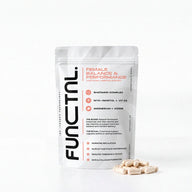
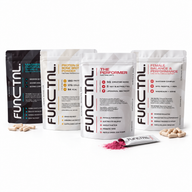
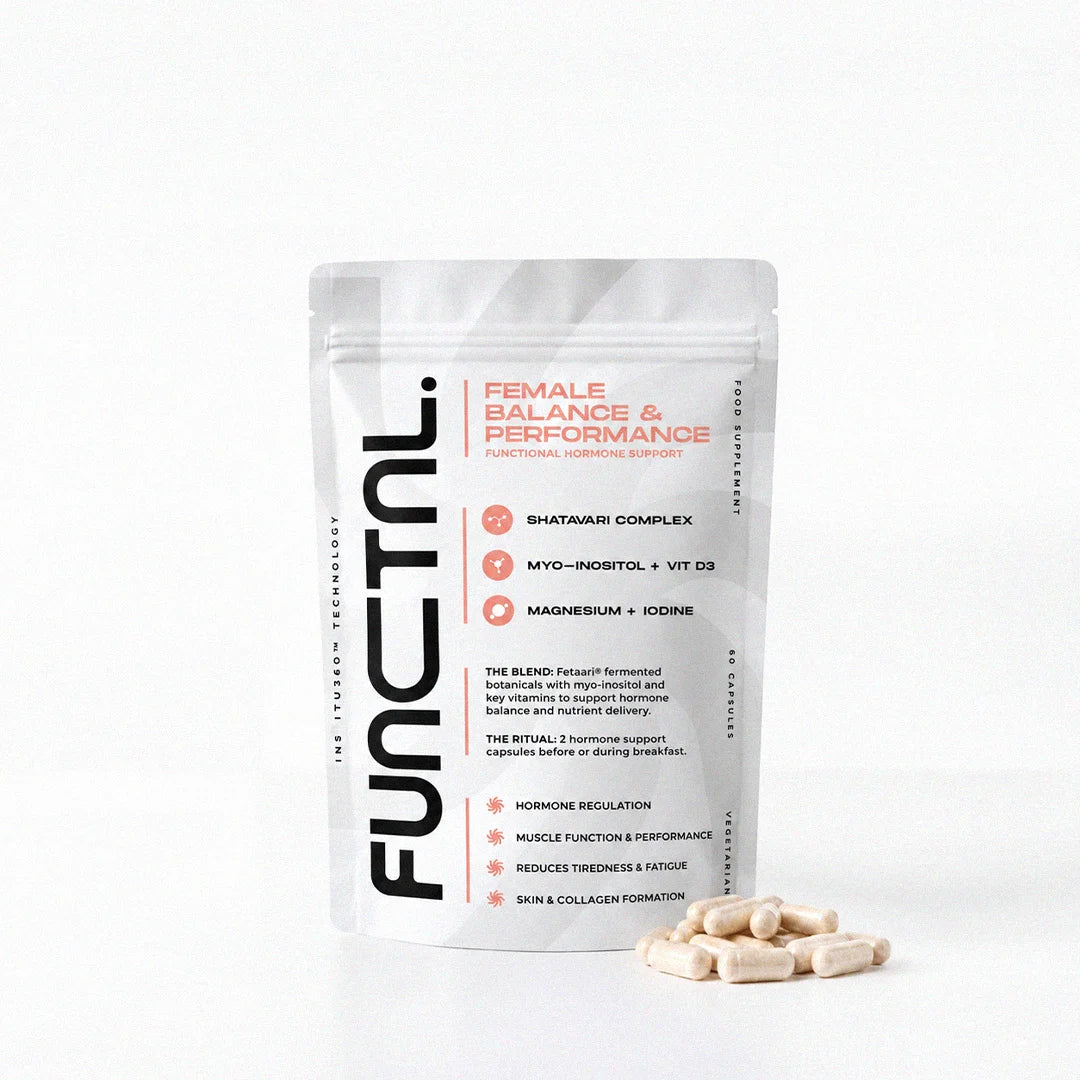
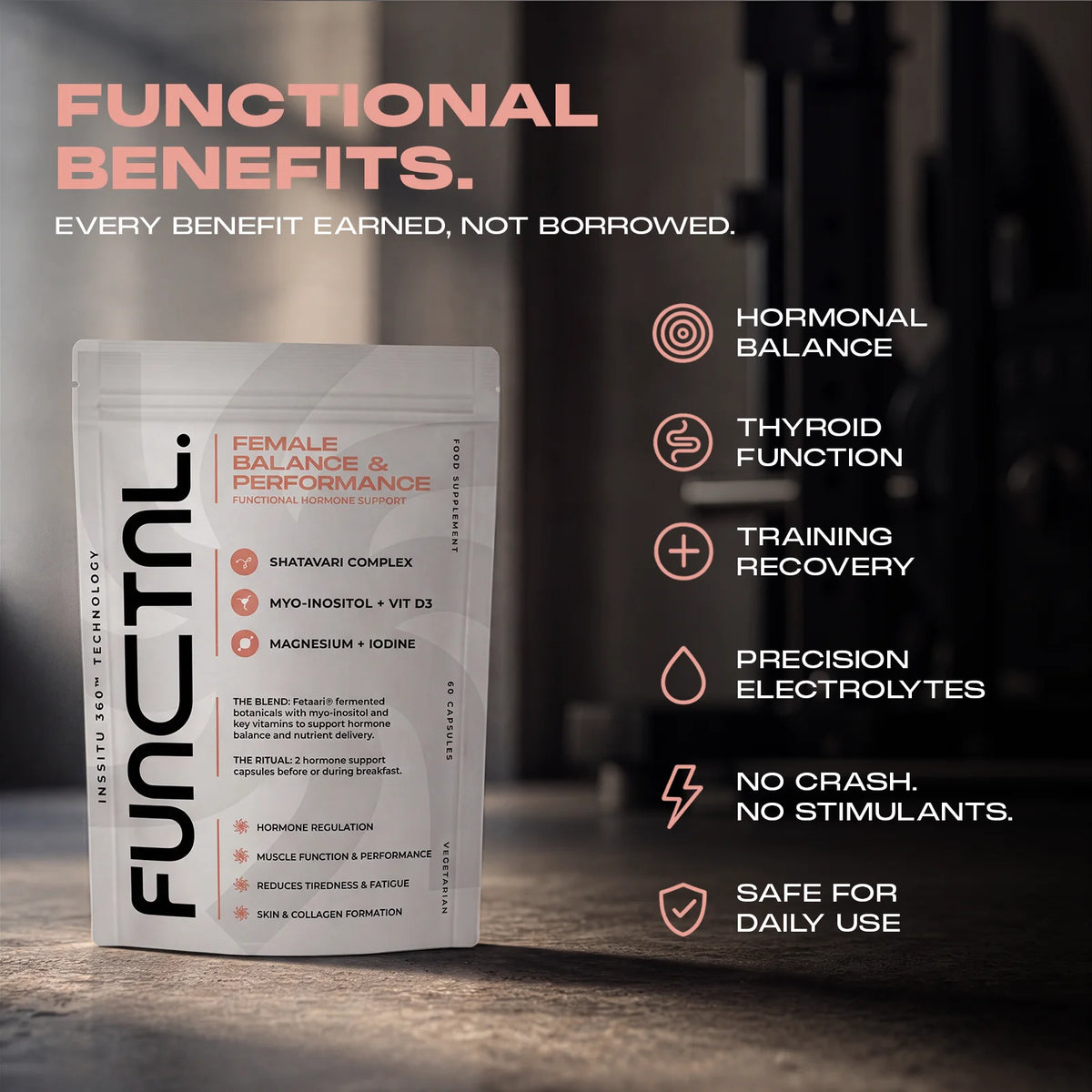
In our formula, shatavari is part of a 250 mg botanical blend. Female Balance & Performance contains Fetaari® (shatavari + fenugreek) 250 mg per daily serving of 2 capsules. That means you're getting less shatavari than the 300 mg used in the trials, and we'd sooner tell you straight than borrow their results.
Those 2 capsules also carry 2.8 mg of vitamin B6, or 200% of the NRV (Nutrient Reference Value, roughly what most healthy adults need daily). Vitamin B6 contributes to the regulation of hormonal activity.
Shop Female Balance & Performance
Frequently asked questions
How long does shatavari take to work?
Going by the trials, about 8 weeks. One 2025 study checked in at week 4 and found women on shatavari no better off than those on placebo, yet by week 8 the gap was clear (Ademola et al., 2025). Hot flush scores took the same slow route in the 2025 perimenopause trial (Mahajan et al., 2025).
Can you take shatavari every day?
Yes. In every trial covered here, women took it once a day, every day. Keep to the daily amount on your pack. And if you already use a women's blend, read its ingredients first so you aren't doubling up on shatavari without realising.
Is shatavari safe to take long term?
We honestly don't know, because no trial in women has gone past 8 weeks. In the short run, side effects were few and liver and kidney markers held steady (Ademola et al., 2025). If you're planning on months of use, have a chat with your GP before you do.
Is shatavari the same as wild asparagus?
No. Shatavari comes from Asparagus racemosus, which is a different species from the green spears in a UK supermarket. Supplements use its dried root, the part the trials tested, so a plate of grilled asparagus on the side of your dinner isn't going to do the same job.
Does shatavari help with stress?
There's a hint of something, nothing more. In a 2025 trial, perceived stress scores fell 7.11 points after 8 weeks on 300 mg a day of shatavari root extract, with no fall on placebo (Mahajan et al., 2025). That's a single small study, and there's no authorised UK stress claim for shatavari.
Sources
- Mahajan S, Avad P, Langade J. (2025). Efficacy and Safety of Shatavari (Asparagus racemosus) Root Extract for Perimenopause: Randomized, Double-Blind, Placebo-Controlled Study. International Journal of Women's Health, 17, 4057-4073.
- Ademola J, Ajgaonkar A, Debnath T, Debnath K, Langade J. (2025). Efficacy and safety of Shatavari root extract (Asparagus racemosus) for menopausal symptoms: a randomized, double-blind, three-arm, placebo-controlled study. Frontiers in Reproductive Health, 7.
- O'Leary MF, Jackman SR, Sabou VR, Campbell MI, Tang JCY, Dutton J, Bowtell JL. (2021). Shatavari Supplementation in Postmenopausal Women Improves Handgrip Strength and Increases Vastus lateralis Myosin Regulatory Light Chain Phosphorylation but Does Not Alter Markers of Bone Turnover. Nutrients, 13(12), 4282.
- NHS (2022). Medicines in pregnancy.
- GOV.UK (2026). Great Britain nutrition and health claims (NHC) register.


